Chinese Style Interior Decor: A Modern Buyer’s Guide
Chinese style interior decor does not need red lanterns, dragons or a room full of matching antiques. For contemporary homes, the stronger approach is to borrow the discipline of Chinese interiors: a clear silhouette, a restrained material palette and one object with enough presence to anchor the space. That approach also overlaps with japandi decor, where craft and calm matter more than obvious decoration.
What Chinese style interior decor means today
Traditional Chinese interiors often organise a room around symmetry, framed views and a hierarchy of objects. A modern interpretation keeps those ideas but removes the stage-set quality. A console can hold one figurine and one wall relief; a living room can use dark timber, pale plaster and a single ink-toned accent. The result feels informed by Chinese design without pretending to be a period room.
The same restraint explains why this style sits comfortably beside Japanese wabi sabi objects. Both traditions reward irregular surfaces, visible handwork and empty space. The difference is in the references and proportions, not in a rule that every surface must be rustic or antique.
Start with one object, not a room theme
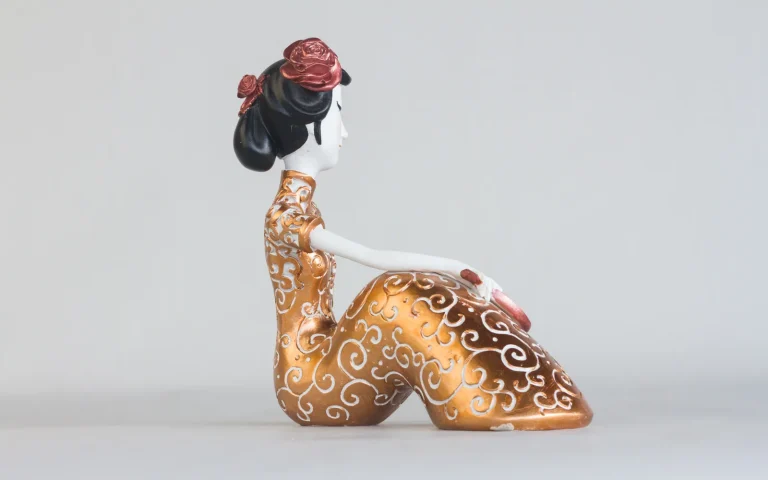
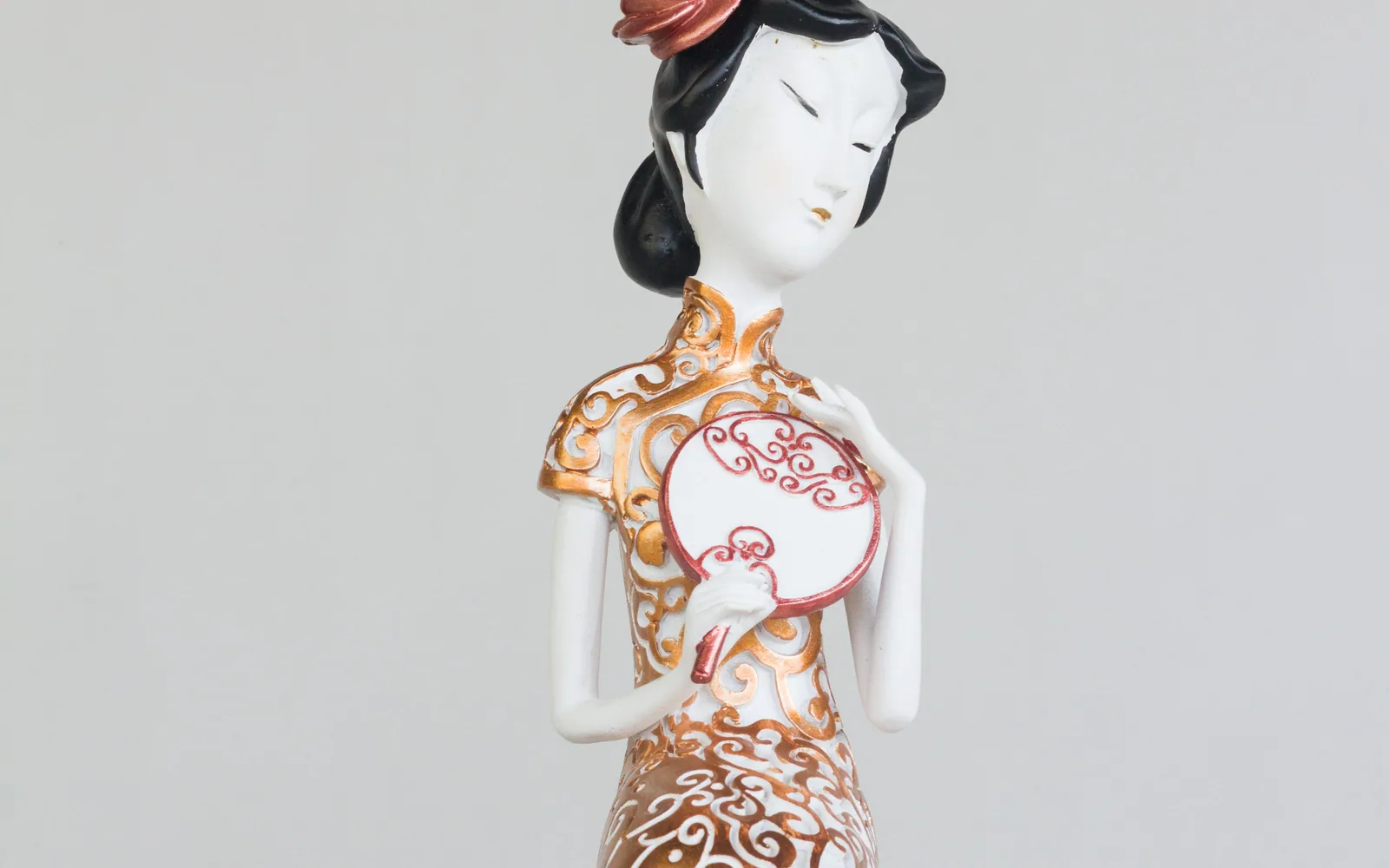
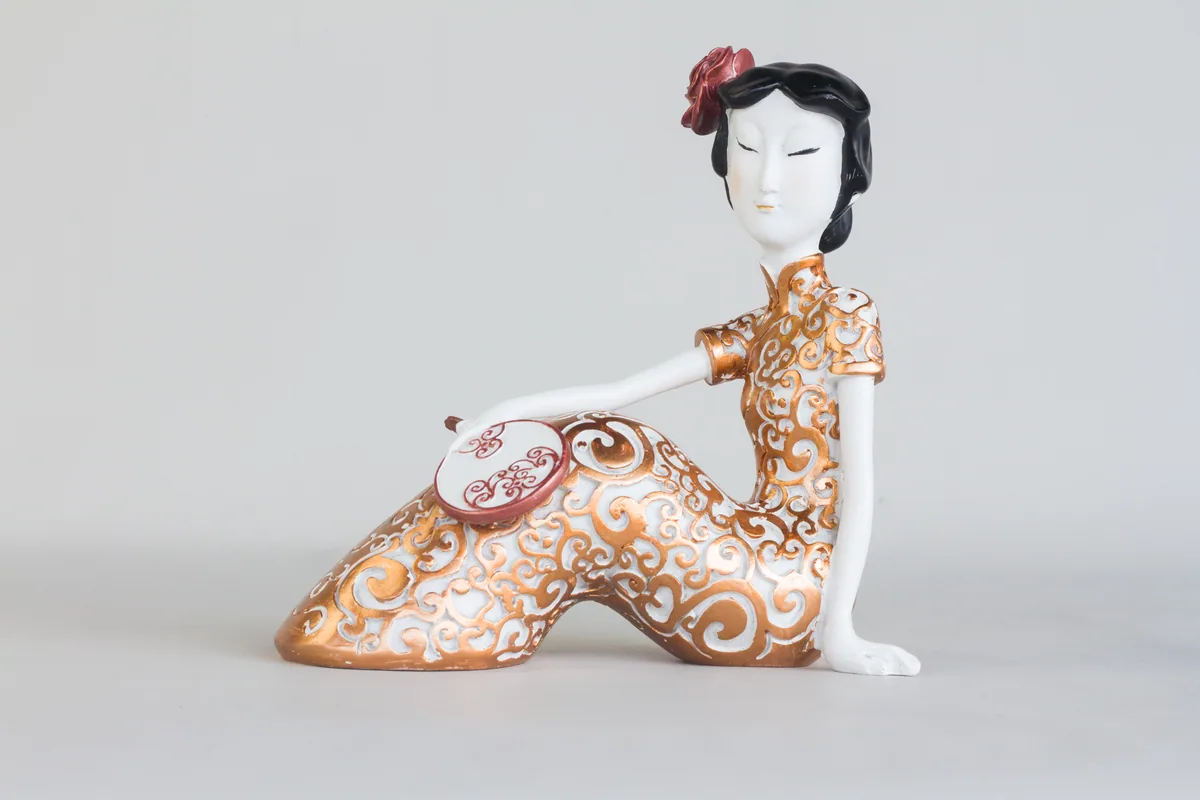
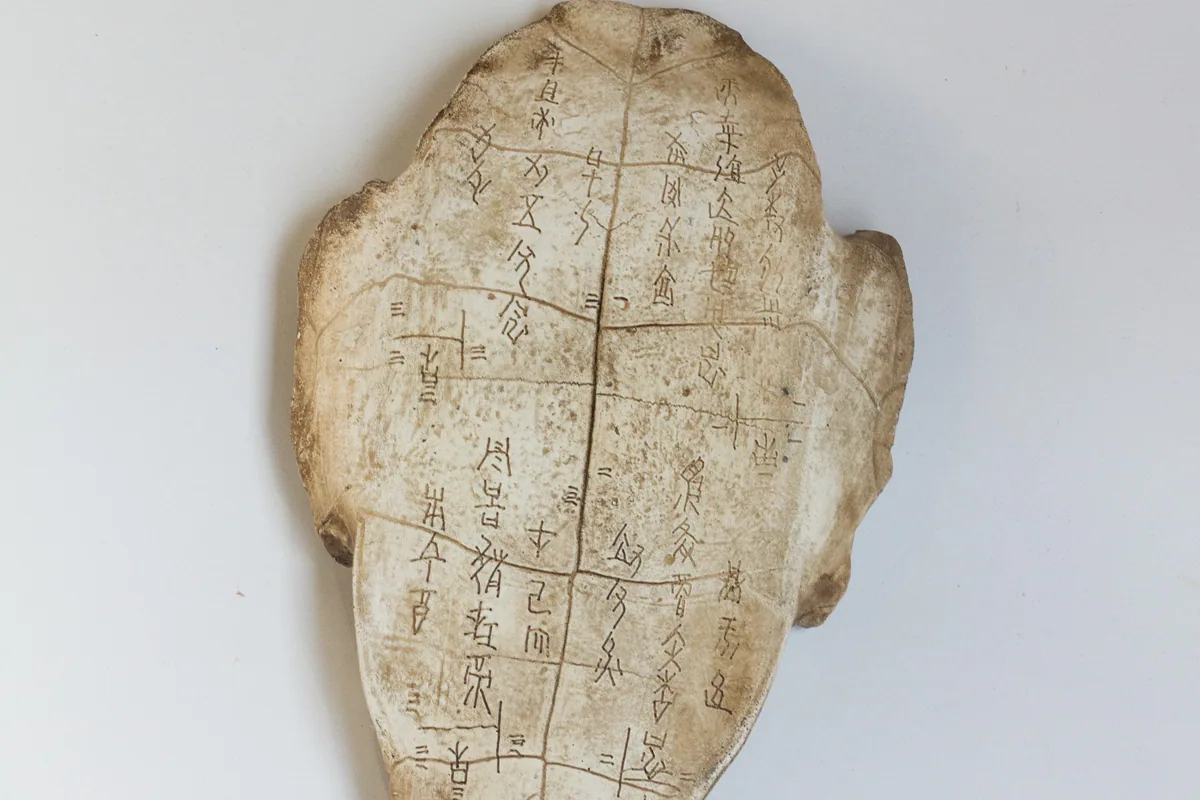
Choose the piece that gives the room its first clear idea. A qipao figurine can supply a human silhouette and a controlled note of gold. An oracle bone shell relief can supply texture, history and a quieter wall presence. Trying to introduce both at once in a small room usually makes the scheme feel busier than it needs to be.
Let the object set the secondary decisions. If the figurine has a warm gold finish, repeat that warmth in a brass lamp or a timber frame. If the wall relief is pale and mineral, keep the nearby ceramics tonal rather than adding a strong blue or red. This is how oriental sculpture decor becomes part of the room instead of a separate collection.
Materials, colour and the ink-and-stone palette
An ink and stone palette decor scheme is a reliable starting point for a contemporary Chinese-inspired room. Think charcoal, graphite, warm grey, chalk white and a small amount of aged gold or bronze. The palette leaves room for texture: honed stone, matte resin, brushed metal, raw silk, lacquer or a hand-finished ceramic surface.
Keep saturated colour selective. A deep oxblood cushion, a single black lacquer tray or a dark timber frame can carry more weight than several bright accessories. In a smaller apartment, use one dark anchor and several mid-tones so the room retains depth without becoming gloomy.
How to place a qipao figurine
Place a qipao figurine at seated eye level where the face, posture and surface pattern can be read. A console beside a doorway, a low bookcase or a side table next to a chair usually works better than a high shelf. Leave at least one hand’s width around the silhouette, and avoid placing it directly beneath a strong downlight that flattens the face.
For a pair, vary the pose or finish rather than repeating the same object. A standing figure beside a seated figure can create a conversation, but they still need a shared base line. If the room is already busy, use one figurine and let the wall stay quiet.
How to use an oracle bone relief
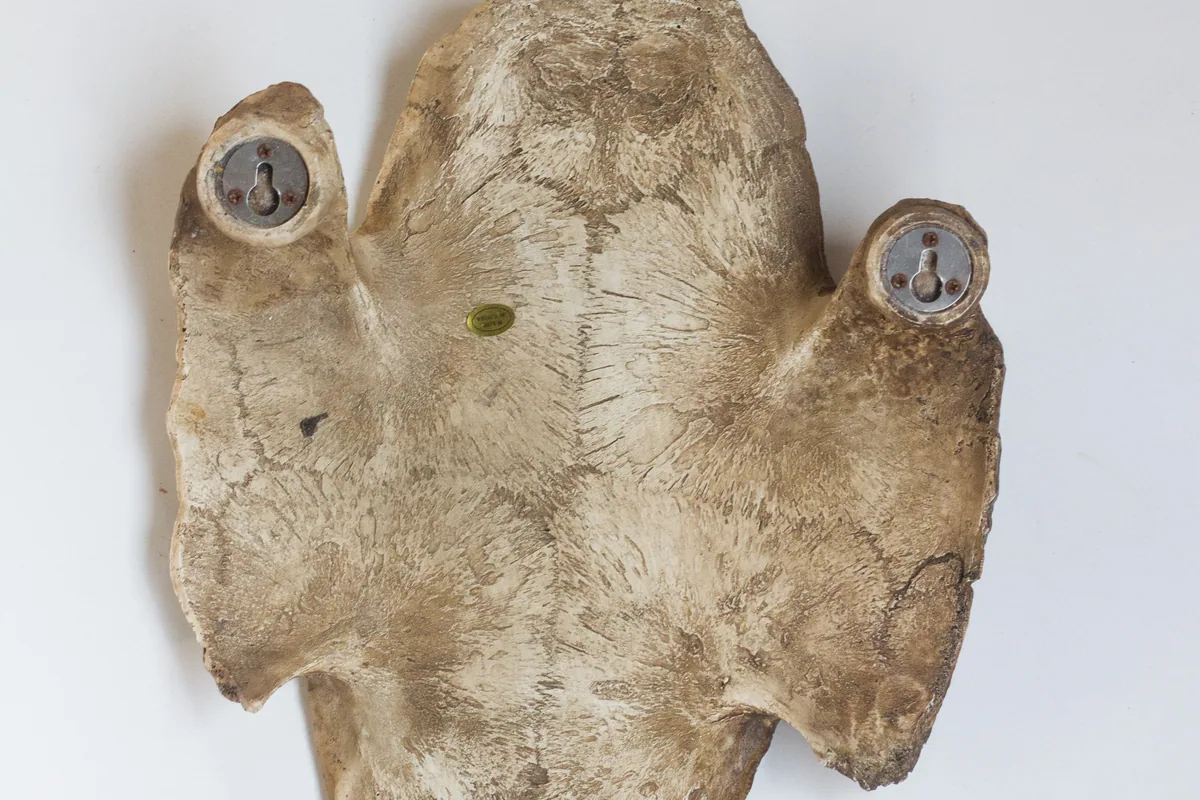
An oracle bone relief behaves like a small architectural fragment. It can sit above a console, beside a doorway or in a study where the incised surface is seen close up. Keep the surrounding wall simple, and use grazing light from one side so the carved lines produce shadow.
Do not crowd the relief with a gallery wall of unrelated prints. Its value comes from the pause around it. In an Asian inspired living room, one pale relief can balance darker furniture and prevent the scheme from becoming heavy.
Lighting and negative space
Chinese-inspired interiors use negative space as an active material. Empty wall, a low bench and a single object can be more powerful than a fully decorated surface. Lighting should support that calm: warm, directed light on the object, softer ambient light for the room and no visible cable crossing the display.
Use a warm neutral bulb rather than a very yellow source, especially with gold or bronze finishes. Check the object at night as well as in daylight, because a metallic surface can become too bright under a narrow spotlight.
A buying checklist for international buyers
- Choose one primary object before buying accessories.
- Check the actual height and footprint against the surface.
- Confirm whether the finish is painted, gilded, glazed or sealed.
- Ask how the piece is packed if it will travel internationally.
- Keep the palette to three main tones and vary the texture.
- Leave enough empty space around the object to read its silhouette.
Our qipao lady figurine and oracle bone shell relief show two different ways into the style, while the custom and trade page explains how to specify a finish for a larger interior project. The studio profile gives more context on the materials used across the collection.
Further reading: Smithsonian National Museum of Asian Art, The Met Asian Art collection.
Frequently asked questions
How do you use Chinese style decor without it looking themed?
Choose one strong object and let the architecture, materials and empty space do most of the work. Avoid matching dragons, lanterns and red accents together, and repeat only the palette or finish rather than a literal motif.
What colours suit a modern Chinese-inspired interior?
An ink and stone palette of charcoal, warm grey, chalk white and aged bronze is a practical base. Add one deeper accent such as oxblood or black lacquer, then keep the remaining surfaces tonal and textured.
Where should a qipao figurine be displayed?
Place it at seated eye level on a console, low bookcase or side table where the face and surface pattern can be seen. Leave space around the figure and avoid a hard downlight directly above it.
Can Chinese and Japanese design elements be mixed?
Yes, when the mix is based on shared principles such as restraint, natural texture and asymmetry rather than a collage of symbols. Keep one object as the focal point and let the other pieces support its material and proportion.
{“@context”:”https://schema.org”,”@type”:”FAQPage”,”mainEntity”:[{“@type”:”Question”,”name”:”How do you use Chinese style decor without it looking themed?”,”acceptedAnswer”:{“@type”:”Answer”,”text”:”Choose one strong object and let the architecture, materials and empty space do most of the work. Avoid matching dragons, lanterns and red accents together, and repeat only the palette or finish rather than a literal motif.”}},{“@type”:”Question”,”name”:”What colours suit a modern Chinese-inspired interior?”,”acceptedAnswer”:{“@type”:”Answer”,”text”:”An ink and stone palette of charcoal, warm grey, chalk white and aged bronze is a practical base. Add one deeper accent such as oxblood or black lacquer, then keep the remaining surfaces tonal and textured.”}},{“@type”:”Question”,”name”:”Where should a qipao figurine be displayed?”,”acceptedAnswer”:{“@type”:”Answer”,”text”:”Place it at seated eye level on a console, low bookcase or side table where the face and surface pattern can be seen. Leave space around the figure and avoid a hard downlight directly above it.”}},{“@type”:”Question”,”name”:”Can Chinese and Japanese design elements be mixed?”,”acceptedAnswer”:{“@type”:”Answer”,”text”:”Yes, when the mix is based on shared principles such as restraint, natural texture and asymmetry rather than a collage of symbols. Keep one object as the focal point and let the other pieces support its material and proportion.”}}]}