Asian Inspired Living Room: A Styling Guide Without the Theme-Park Look
An Asian inspired living room can feel calm, cultured and contemporary, but it can also slip into a themed imitation. The difference is rarely the number of objects. It is the proportion of the room, the honesty of the materials and the confidence to leave space empty. A Chinese style interior decor reference and a quieter japandi decor approach can coexist when both are edited to the same visual discipline.
What makes an Asian inspired living room work
The strongest rooms do not announce a country. They borrow a principle: a low horizontal line, a framed view, a deliberate contrast between dark and light, or a single object placed where the eye can rest. The result should feel like a room that happens to hold Asian references, not a display set built around them.
Start with the architecture you already have. A long sofa, a low console, a window with a clean frame or a chimney breast can all provide the structure. The decorative objects then work with those lines instead of competing against them.
Begin with architecture and proportion
Asian-inspired interiors tend to favour low furniture, visible floor space and a horizontal composition. If your sofa is tall and overstuffed, do not try to force a low-slung look with tiny accessories. Instead, use a low console or bench to create a secondary horizontal line and keep the tallest object off centre.
Measure the empty wall before buying sculpture. A piece that is too small will look lost, while one that touches the ceiling or crowds a doorway will make the room feel constrained. Leave at least one third of the wall or surface visually open, especially around a detailed object.
The ink and stone palette
An ink and stone palette decor scheme gives the room a coherent base without relying on a themed colour such as red or gold. Use chalk white, warm grey, charcoal and a small amount of bronze or black. Vary the finish so the palette does not become flat: matte plaster, honed stone, brushed metal, dark timber and a soft textile.
If you want warmth, add aged brass or a muted rust note rather than a bright accent. If you want calm, keep the contrast low and let texture carry the visual interest. The palette should support the sculpture, not compete with it.
Mix Chinese and Japanese references with restraint
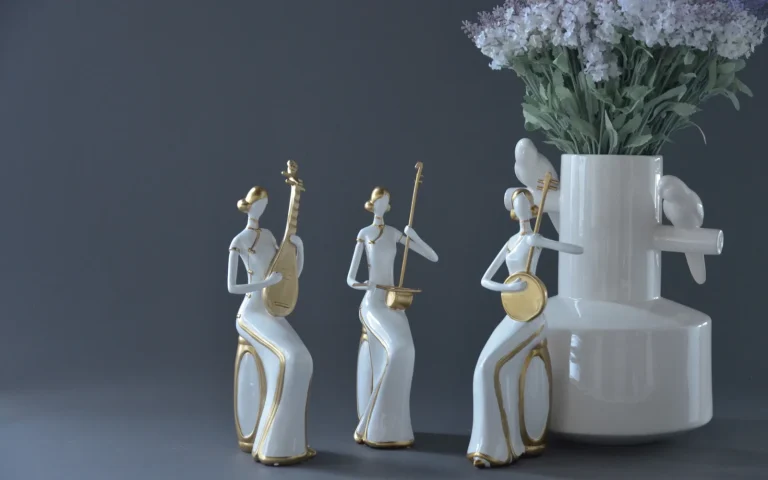
Japanese wabi sabi objects bring irregular texture and a quiet acceptance of imperfection. A Chinese-inspired figurine can bring a more narrative human presence. Put them together only when they share a material or a value, such as a muted finish, visible handwork or a simple silhouette.
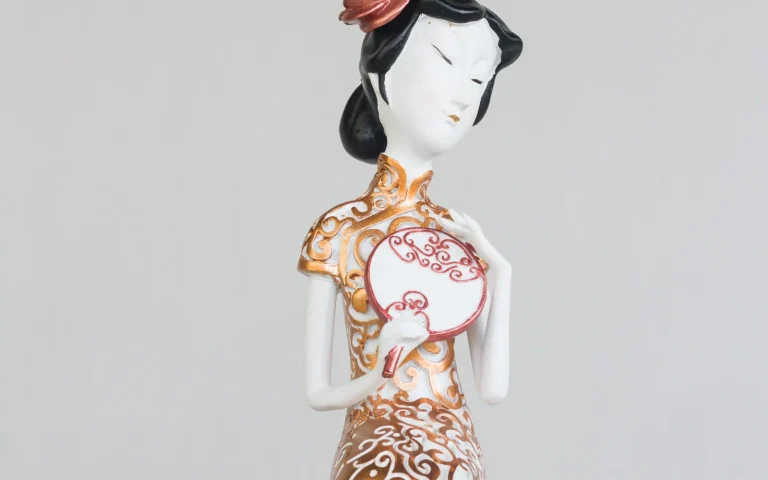
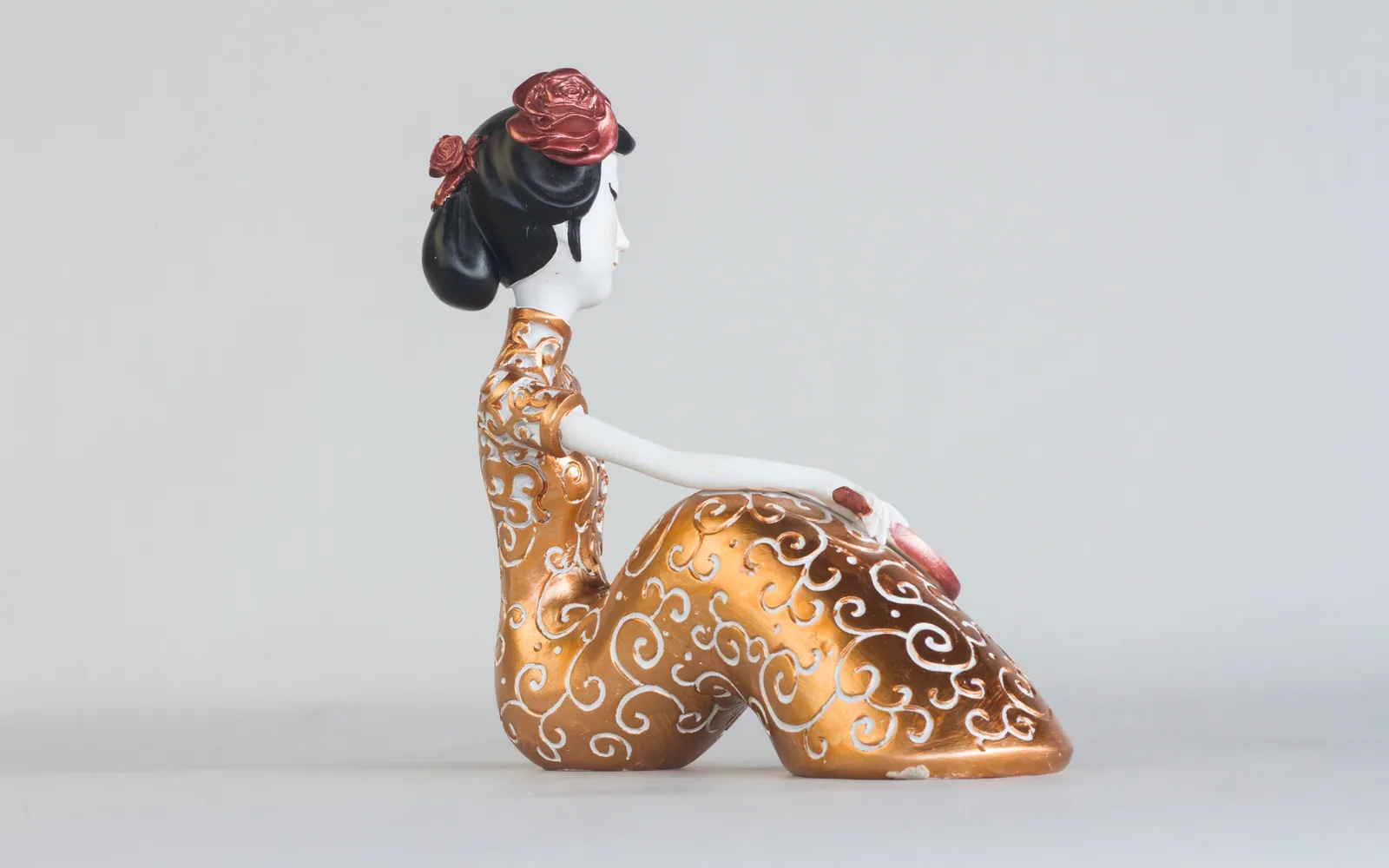
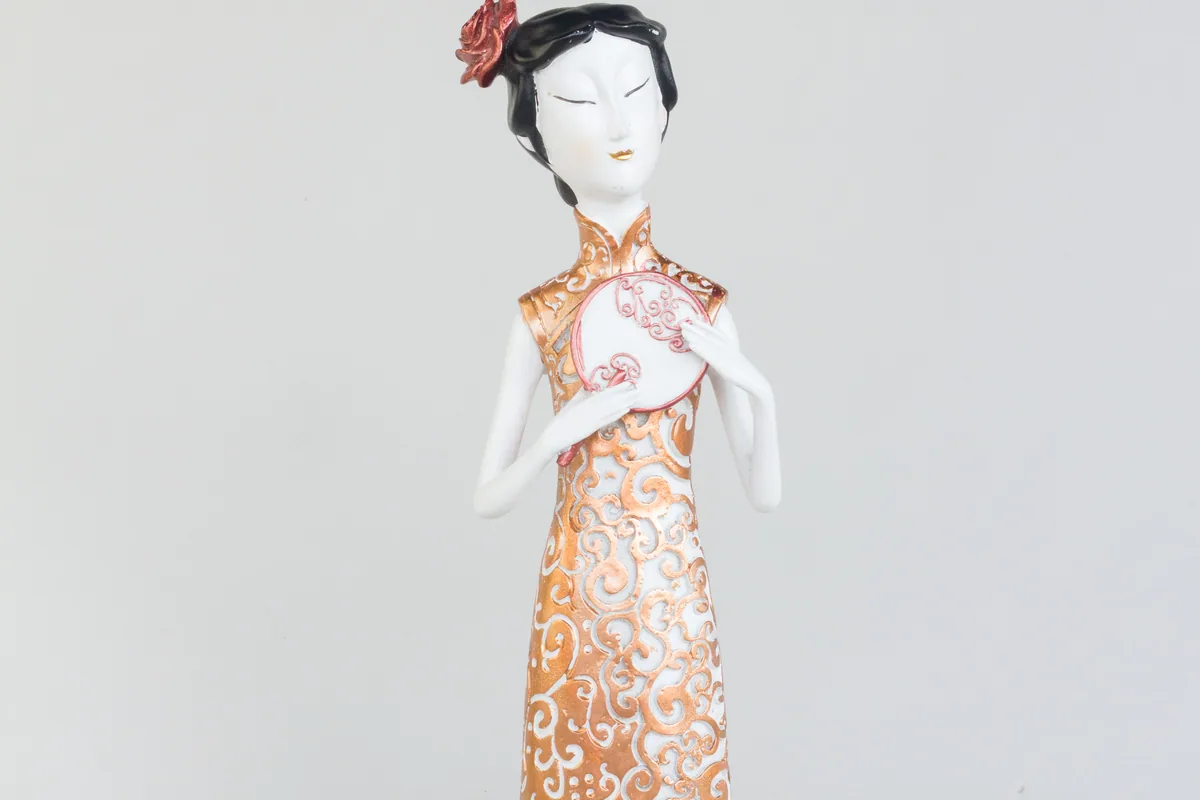
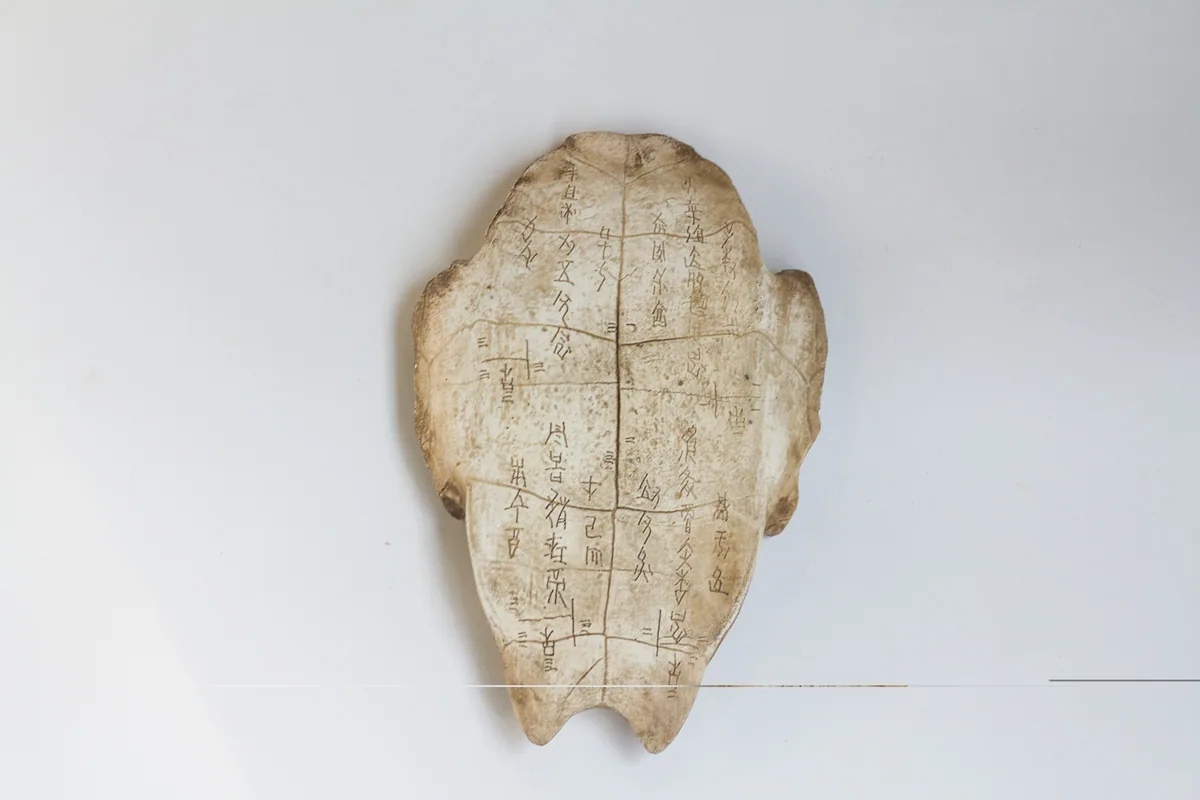
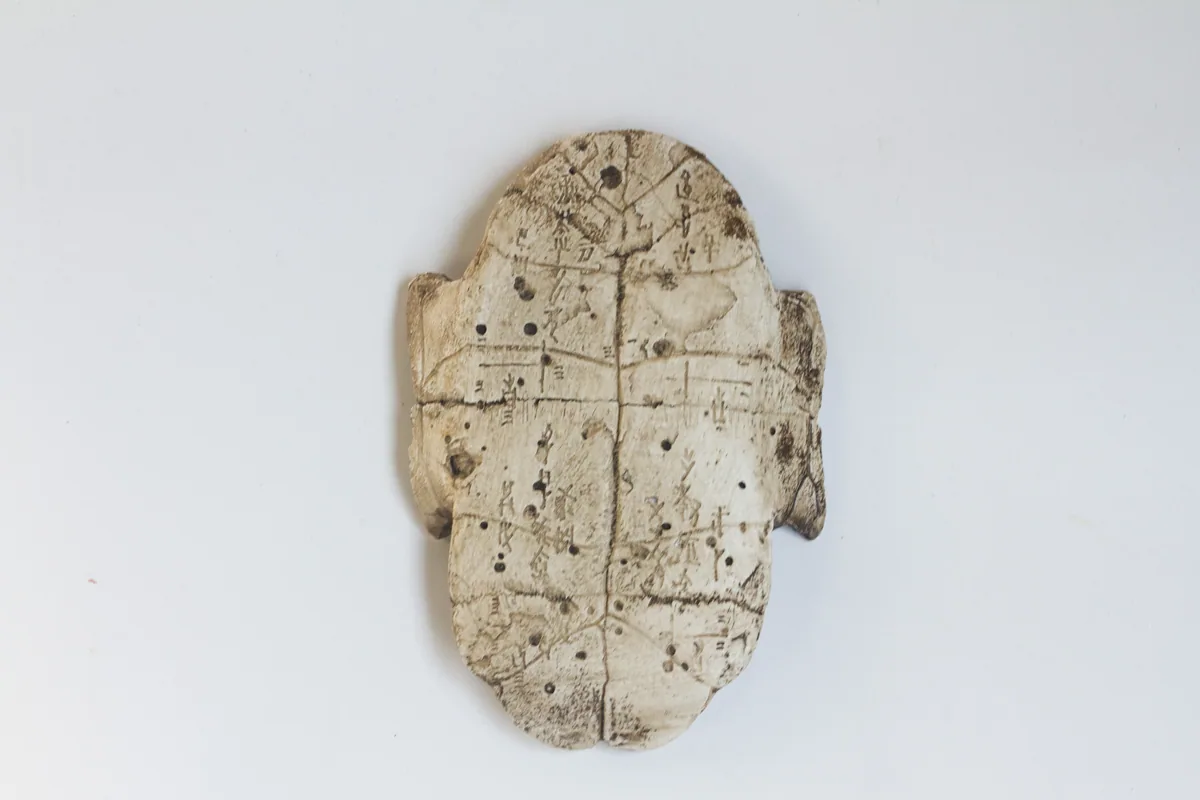
For example, a gold qipao figurine can sit beside a rough stone bowl if the gold is aged rather than bright. A pale oracle bone relief can hang above a dark timber console with a single ceramic vessel. The mix works because the contrast is controlled, not because every object is from the same region.
Sculpture at three heights
Use three levels to make a living room feel composed: a low object on a coffee table, a mid-height piece on a console and a wall relief above it. Do not fill all three with large sculpture. Let one level lead and keep the others quieter.
Oriental sculpture decor is most effective when it is viewed as part of the room rather than a collection on one shelf. A qipao figurine on a side table can be seen from a chair, while an oracle bone relief can hold the wall behind a sofa. The viewer discovers the relationship slowly.
Lighting, screens and negative space
Lighting should graze texture rather than flatten it. Use a warm, directional source for a relief or a figurine, and keep the rest of the room softer. If you use a screen or room divider, choose one with an open rhythm so it frames the view instead of blocking it.
Negative space is part of the design. Leave the wall above a low sofa mostly empty, keep the console surface edited and resist the urge to add a plant, candle and stack of books to every corner. The eye needs a place to rest before it can appreciate detail.
A practical layout sequence
- Clear the room and identify the main horizontal line.
- Choose one anchor object for the living room.
- Set the palette to three main tones and three textures.
- Place the anchor at seated eye level or a comfortable standing height.
- Add one supporting object of a different height or material.
- Check the arrangement from the sofa, doorway and side view.
- Remove one accessory if the surface feels busy.
What to avoid
Avoid matching sets, red-and-gold pairings used as a shortcut and rooms where every surface carries a decorative object. Also avoid mixing too many historical references without a common material or proportion. The goal is a room with a point of view, not a catalogue of styles.
Our qipao lady figurine and oracle bone shell relief offer two scales for this kind of editing, and the journal has more guidance on material and display. For a hospitality or residential project, the custom and trade page explains how to discuss finishes and quantities.
Further reading: Smithsonian National Museum of Asian Art, The Met Asian Art collection.
Frequently asked questions
What is an Asian inspired living room?
It is a contemporary room that borrows principles such as low horizontal lines, natural materials and negative space from Asian design without reproducing a period interior. The best examples feel edited rather than themed.
How do you mix Chinese and Japanese decor?
Mix the traditions through shared qualities such as muted colour, hand-finished texture and simple silhouettes. Keep one object as the focal point and avoid combining many obvious cultural symbols in the same sightline.
How much sculpture should a living room have?
One strong piece per main sightline is usually enough. Add a smaller supporting object only if it introduces a different height or material, and leave at least one third of the surface or wall visually open.
Which colours work with an ink and stone palette?
Charcoal, warm grey, chalk white and a small amount of bronze or black form a reliable base. Add one muted accent such as rust or oxblood if the room needs warmth, but keep most surfaces tonal.
{“@context”:”https://schema.org”,”@type”:”FAQPage”,”mainEntity”:[{“@type”:”Question”,”name”:”What is an Asian inspired living room?”,”acceptedAnswer”:{“@type”:”Answer”,”text”:”It is a contemporary room that borrows principles such as low horizontal lines, natural materials and negative space from Asian design without reproducing a period interior. The best examples feel edited rather than themed.”}},{“@type”:”Question”,”name”:”How do you mix Chinese and Japanese decor?”,”acceptedAnswer”:{“@type”:”Answer”,”text”:”Mix the traditions through shared qualities such as muted colour, hand-finished texture and simple silhouettes. Keep one object as the focal point and avoid combining many obvious cultural symbols in the same sightline.”}},{“@type”:”Question”,”name”:”How much sculpture should a living room have?”,”acceptedAnswer”:{“@type”:”Answer”,”text”:”One strong piece per main sightline is usually enough. Add a smaller supporting object only if it introduces a different height or material, and leave at least one third of the surface or wall visually open.”}},{“@type”:”Question”,”name”:”Which colours work with an ink and stone palette?”,”acceptedAnswer”:{“@type”:”Answer”,”text”:”Charcoal, warm grey, chalk white and a small amount of bronze or black form a reliable base. Add one muted accent such as rust or oxblood if the room needs warmth, but keep most surfaces tonal.”}}]}