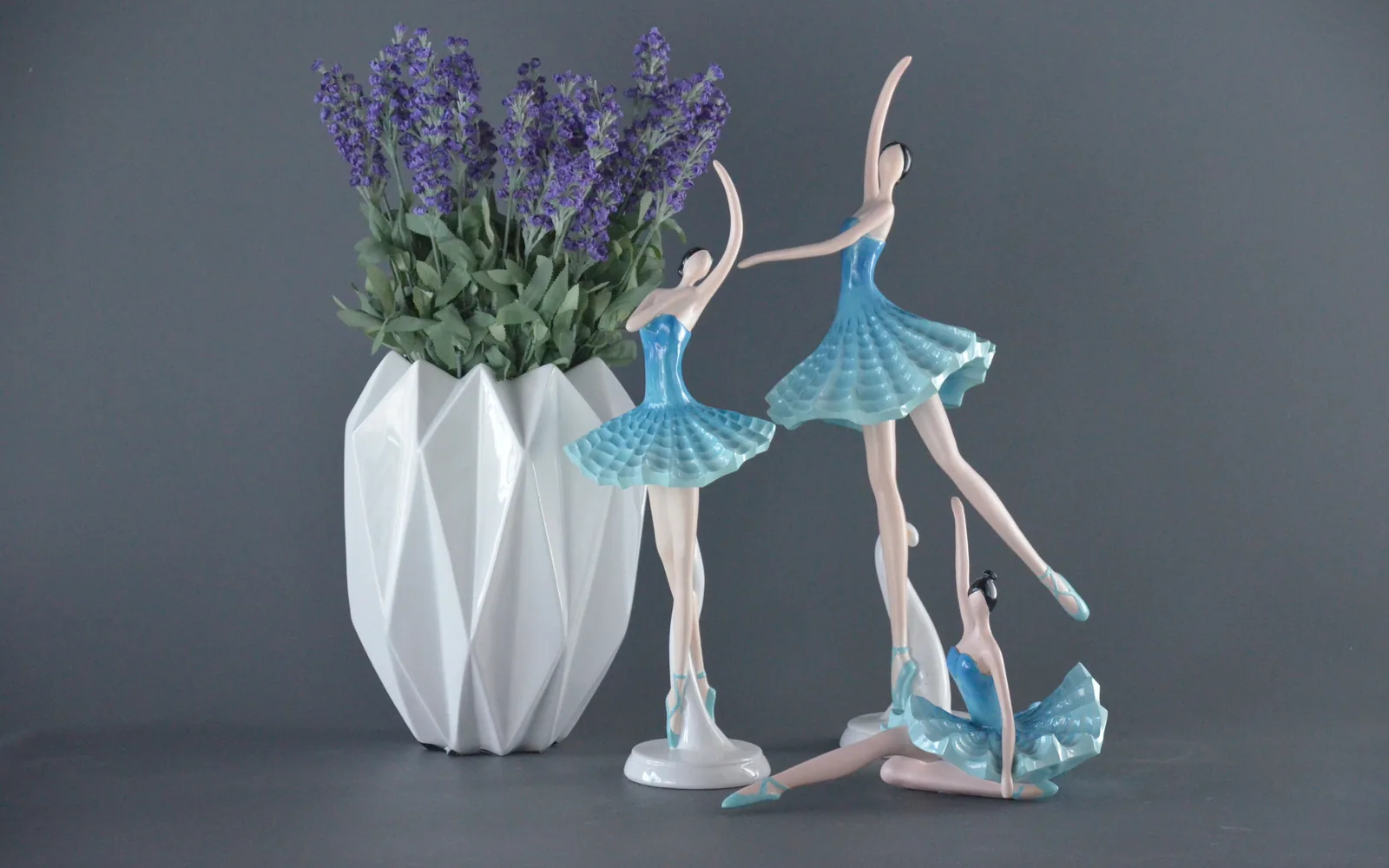
Quiet Luxury Home Decor: How to Style It Without Looking Empty
Quiet luxury home decor is easy to describe and hard to execute. The look depends on restraint, material quality and proportion, and when any of those three is missing the room does not read as calm. It reads as unfinished. This is what the approach actually requires, and where most attempts go wrong.
A quiet luxury interior can draw from European Nordic interior style without copying it. A warm minimalist interior usually depends on texture, proportion and one strong anchor, while sculpture styling gives the eye a focal point without adding pattern or bright colour.
What quiet luxury means in a room
The phrase describes interiors where value is communicated through material and proportion rather than through pattern, colour or branding. Surfaces are honest: stone that looks like stone, wood that looks like wood, a glaze rather than a printed imitation.
It is not the same as minimalism. A quiet room can hold a dozen objects. What it cannot hold is a dozen objects competing for the same attention. The discipline is in the hierarchy, not the count.
Start with fewer, heavier objects
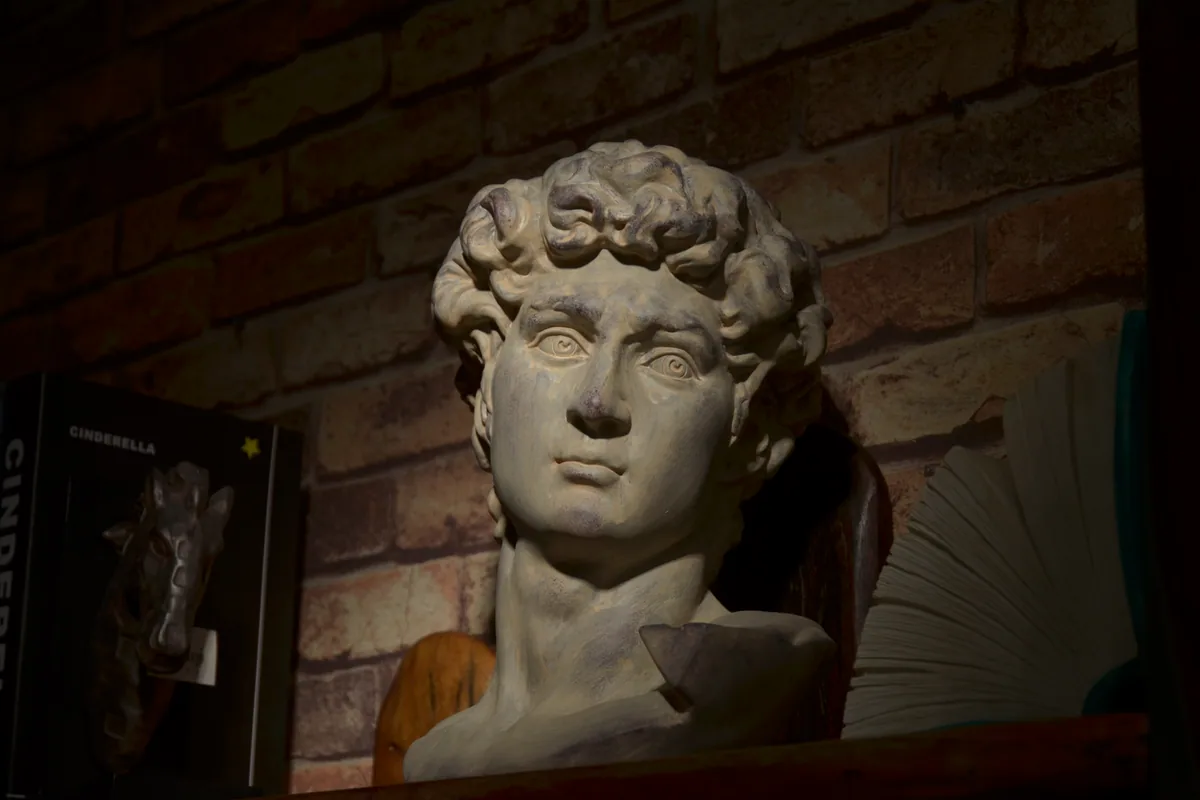
Give each surface one object that carries real visual weight, then let smaller pieces support it. A single substantial sculpture on a console does more than five lightweight ornaments arranged in a row, because the eye has somewhere to land and then somewhere to rest.
Weight here means presence, not kilograms. A large matte vessel or a solid cast study both read as heavy even when they are hollow. What undermines the effect is a cluster of pieces that are all the same size, all the same tone and all equally detailed.
The palette that carries it
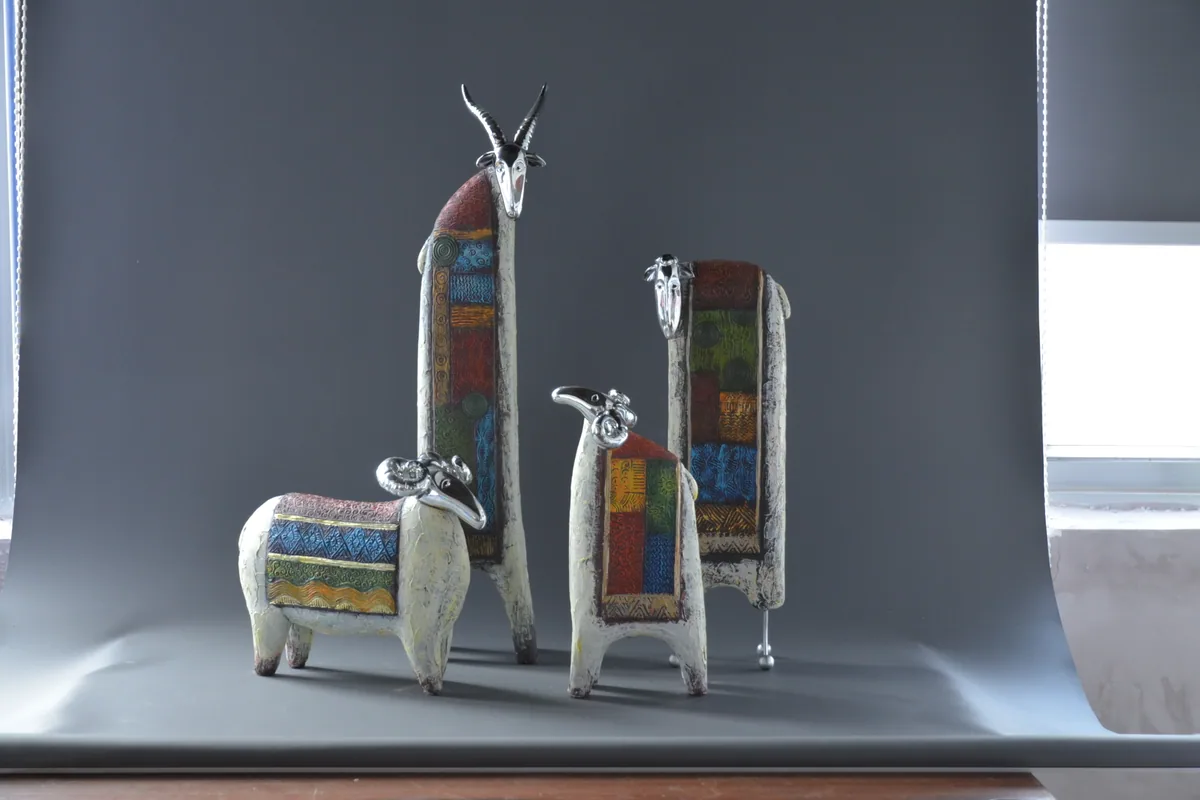
Warm neutrals do most of the work, but the mistake is stopping there. A room built only from beige and cream goes flat. Add one darker anchor, such as aged bronze, charcoal stone or walnut, and one lighter note, such as unglazed porcelain or pale linen, so the eye can register depth.
Keep the number of distinct hues low and the number of distinct textures high. That single substitution is what separates a quiet room from a boring one.

Texture does the work pattern usually does
In a patterned room, contrast comes from print. In a quiet room it has to come from surface: the difference between honed and polished, between matte glaze and burnished metal, between a rough cast finish and a smooth one.
- Pair one glossy surface with several matte ones rather than the reverse.
- Repeat a single material no more than three times in one sightline.
- Let one piece carry visible handwork, and keep the rest precise.
Where sculpture fits
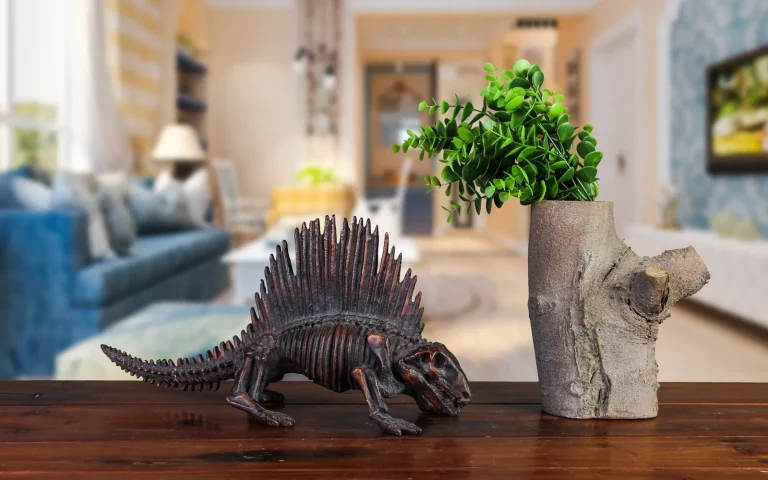
Sculpture is the most efficient way to add character without adding colour. A figurative piece, a study object or a natural-history cast introduces a silhouette that upholstery and case goods cannot provide, which is exactly the contrast a calm room needs.
Place it where it will be seen close up as well as from across the room. A shelf at seated eye level, a console beside a doorway or a side table next to a lamp all work, because they let the object be examined rather than merely noticed.
What to avoid
Avoid matching sets. Three identical ornaments on a shelf announce that they were bought together, which is the opposite of the collected feeling the style depends on. Avoid high-contrast graphic prints, which pull attention away from material, and avoid tall thin objects grouped together, which create visual noise without mass.
Also avoid over-lighting. A single warm source that grazes an object reveals its surface, while several bright sources flatten everything into the same even wash and remove the shadows that give a room depth.
A useful check is to view the arrangement in black and white before you commit to it. Colour disappears and the real composition becomes obvious: shape, contrast, spacing and scale. If the surface still holds together without colour, it will feel resolved once the palette is added back.
A shelf that reads calm
Begin with one anchor piece placed off centre, then add books laid flat or standing in a short run, then one smaller object of a different material. Leave at least a third of the shelf empty. Step back and remove whatever your eye keeps returning to that is not the anchor.
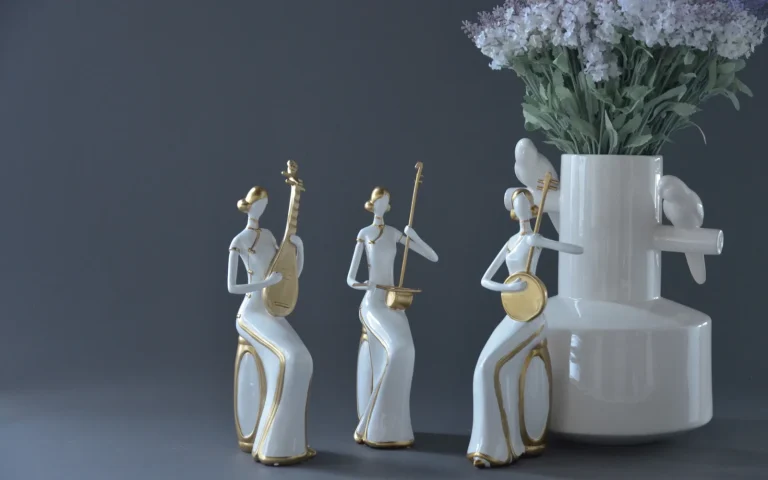
If you are building a range for this kind of interior, our qipao lady figurine and caravan camel figure both work as anchor pieces at different scales, and the studio profile explains the finishes available across the collection.
Further reading: The Met: European Sculpture and Decorative Arts.
Frequently asked questions
What is quiet luxury in home decor?
It describes interiors where value is expressed through material quality, proportion and restraint instead of pattern, bright colour or visible branding. Surfaces are honest and the object hierarchy is deliberate rather than accidental.
How many objects should a quiet shelf hold?
There is no fixed number, but leave at least a third of the shelf empty and give one piece clear visual priority. A single anchor, a short run of books and one contrasting object is usually enough for a standard shelf.
Is quiet luxury the same as minimalism?
No. Minimalism reduces the number of objects, while quiet luxury reduces competition between them. A calm room can hold many pieces as long as one clearly leads and the rest support it without echoing it.
Which colours work with a quiet luxury interior?
Warm neutrals are the base, but add one darker anchor such as aged bronze or charcoal and one lighter note such as unglazed porcelain. Keeping the number of hues low while varying texture is what prevents the palette going flat.
{“@context”:”https://schema.org”,”@type”:”FAQPage”,”mainEntity”:[{“@type”:”Question”,”name”:”What is quiet luxury in home decor?”,”acceptedAnswer”:{“@type”:”Answer”,”text”:”It describes interiors where value is expressed through material quality, proportion and restraint instead of pattern, bright colour or visible branding. Surfaces are honest and the object hierarchy is deliberate rather than accidental.”}},{“@type”:”Question”,”name”:”How many objects should a quiet shelf hold?”,”acceptedAnswer”:{“@type”:”Answer”,”text”:”There is no fixed number, but leave at least a third of the shelf empty and give one piece clear visual priority. A single anchor, a short run of books and one contrasting object is usually enough for a standard shelf.”}},{“@type”:”Question”,”name”:”Is quiet luxury the same as minimalism?”,”acceptedAnswer”:{“@type”:”Answer”,”text”:”No. Minimalism reduces the number of objects, while quiet luxury reduces competition between them. A calm room can hold many pieces as long as one clearly leads and the rest support it without echoing it.”}},{“@type”:”Question”,”name”:”Which colours work with a quiet luxury interior?”,”acceptedAnswer”:{“@type”:”Answer”,”text”:”Warm neutrals are the base, but add one darker anchor such as aged bronze or charcoal and one lighter note such as unglazed porcelain. Keeping the number of hues low while varying texture is what prevents the palette going flat.”}}]}