Dinosaur Skeleton Decor: How to Choose Scale, Material and Placement
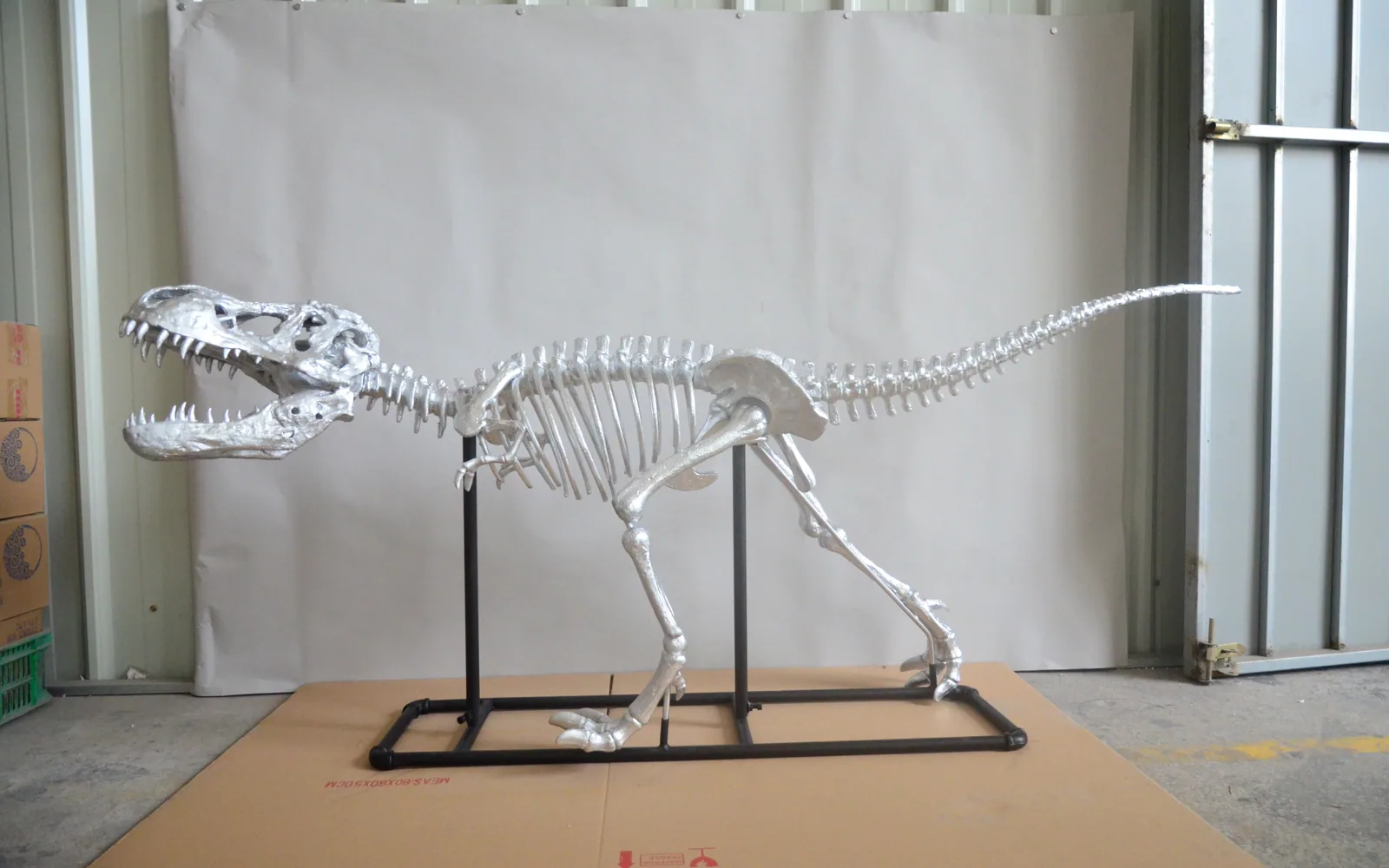
Dinosaur skeleton decor is easy to buy by length and hard to place well. A dramatic model can overwhelm a small room, while an undersized piece disappears on a large wall. The better approach is to choose the skeleton around viewing distance, available depth and the story the room is trying to tell. Material and support then follow from that decision.
Start with viewing distance
A skeleton meant to be seen from a sofa across the room needs a stronger silhouette than one displayed beside a desk. Large ribs, a clear spine and an open tail shape hold up at distance. Smaller vertebrae and fine toe bones reward close inspection but turn into visual noise when the object is far away.
Measure the longest sightline in the room and the closest point a viewer can approach. A home-office shelf is usually a close-view setting. A double-height hallway or retail window is a distance-view setting. The same model can work in both, but the scale and lighting requirement changes.
Scale is more than overall length
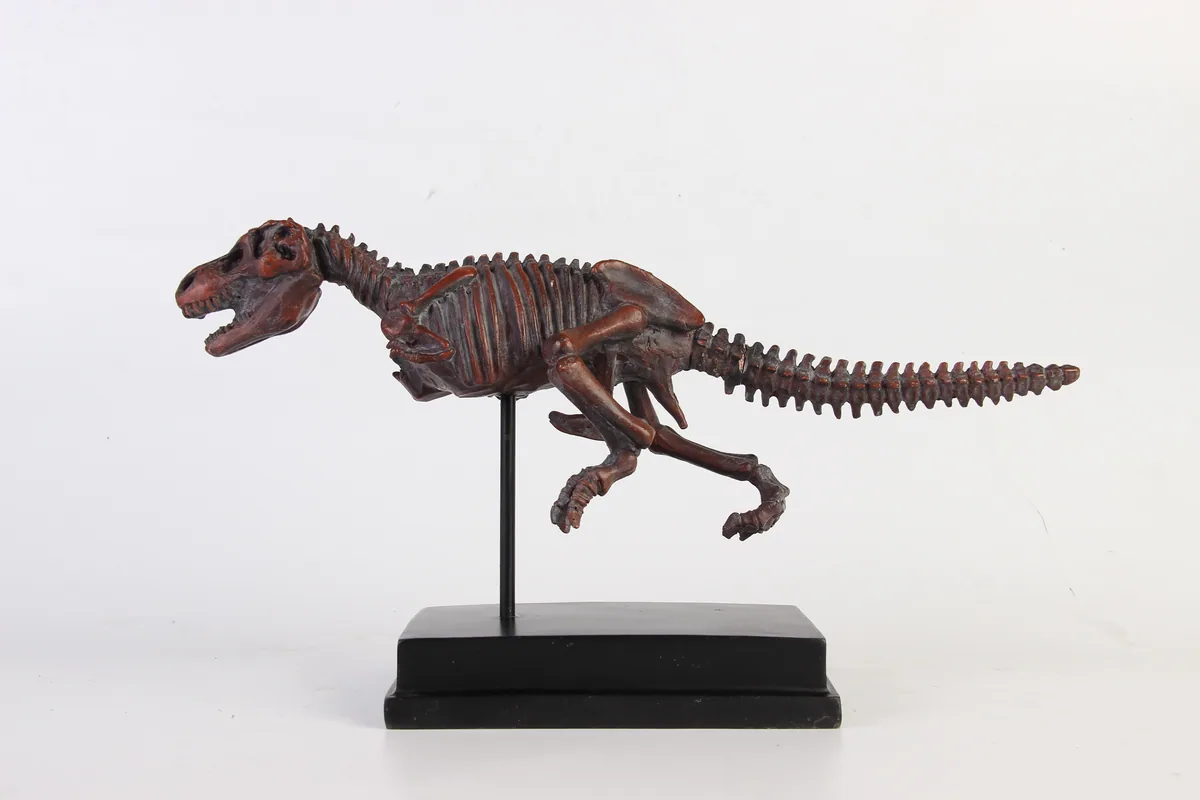
Manufacturers often describe a dinosaur skeleton by length, but height and footprint are equally important. A long tail can occupy a narrow shelf if it runs parallel to the wall, while a raised head may need vertical clearance. Check the depth from the front feet to the rear support as well as the width.
Leave at least a hand’s width of empty space around a statement skeleton. The silhouette needs air, especially around the head, tail and legs. If the piece is placed between books, boxes or other sculpture, the outline stops reading as a skeleton and becomes another dense object.
Material and finish at different sizes
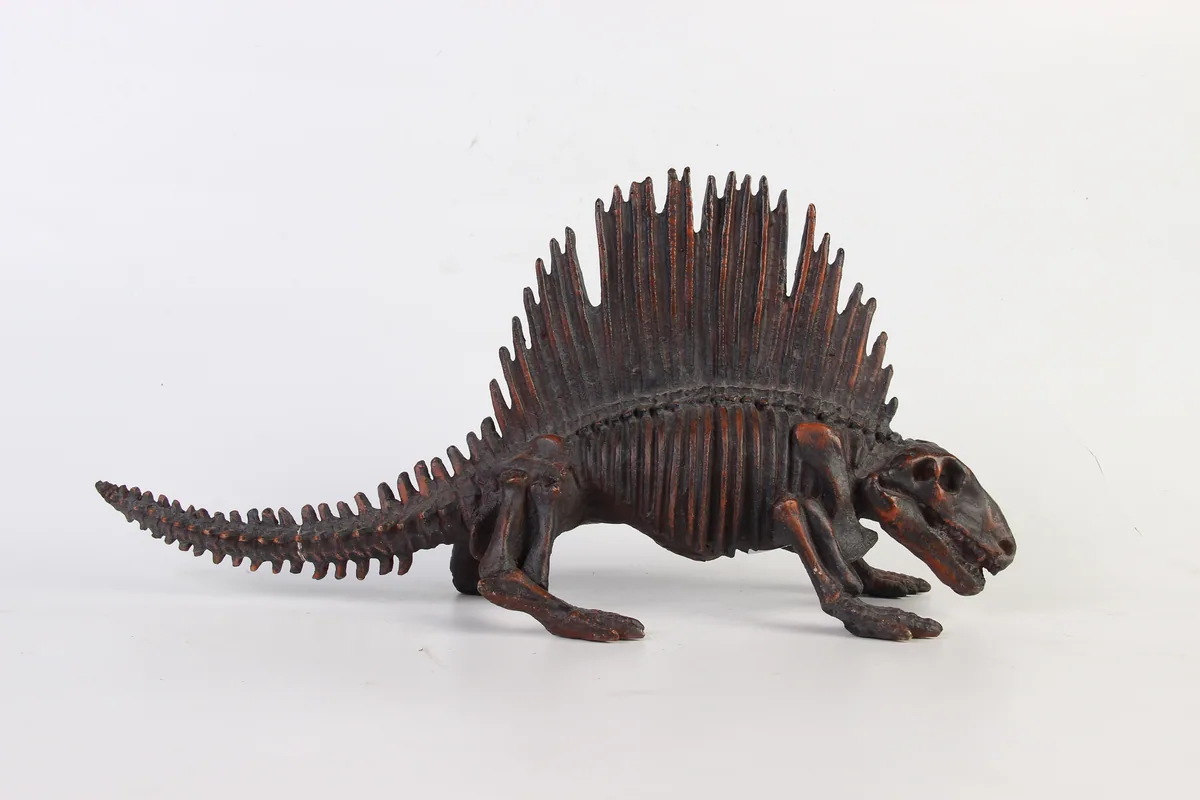
Resin is the usual material for decorative dinosaur skeleton models because it captures fine bone texture and can be cast in complex sections. It is lighter than stone, but a large piece still needs a stable base and may need internal reinforcement at thin joints.
A museum quality dinosaur replica should define the armature, section joints and finish as well as the visible surface. The same logic applies to a pterosaur skeleton decor piece or a prehistoric bird skeleton: lightness helps installation, while stability at the connection points decides whether the object displays well.
Finish changes the character. A chalky bone finish reads like a museum study, while a darker mineral finish feels more architectural. Metallic or aged treatments push the piece toward sculpture rather than natural history. Choose the finish under the same light the object will live in, because a warm spotlight can make a pale skeleton look yellow.
Materials used for museum quality replicas
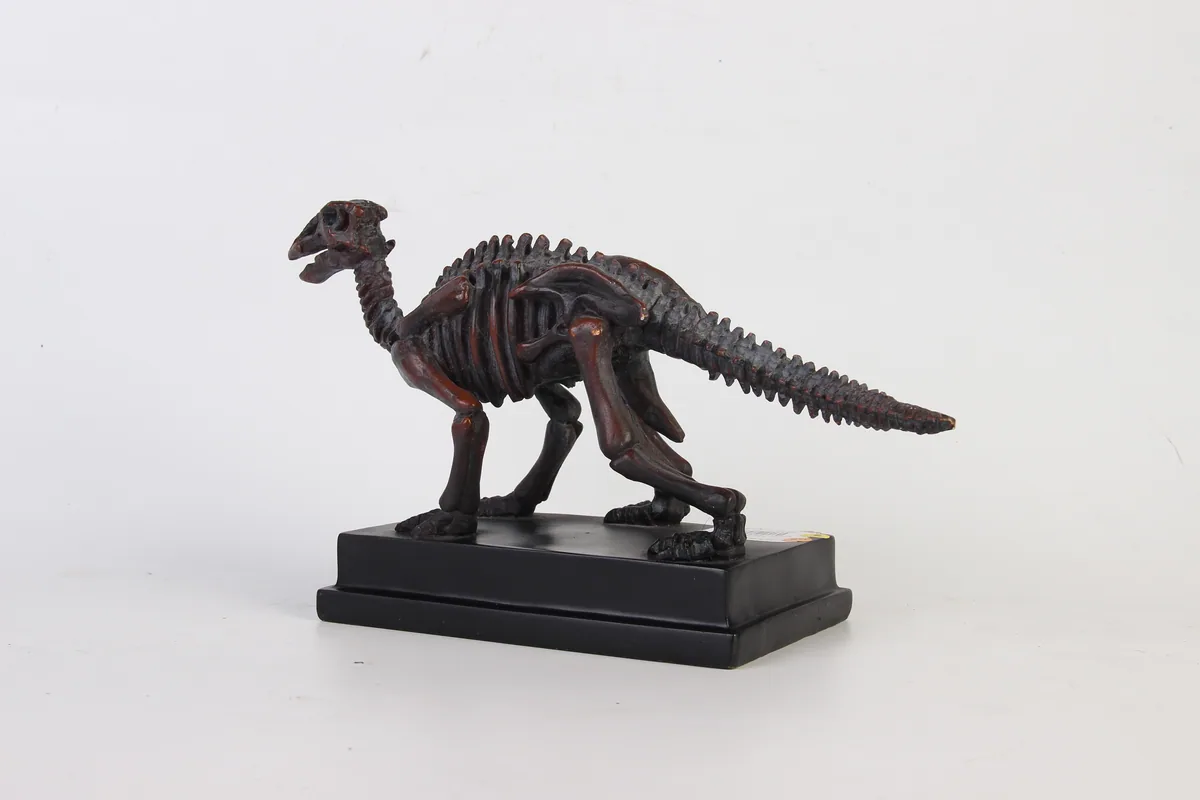
A museum-quality dinosaur replica may combine resin, fiberglass, metal armature and a separate mounting system. The visible surface is only one part of the construction. For a custom project, ask how the weight is carried, whether the skeleton arrives in sections and how those sections are joined.
This matters most when the piece is suspended or mounted above head height. A decorative object can be beautiful and still be unsuitable for an installation without engineering. The supplier should be able to explain the load path from the skeleton to the wall, ceiling or floor.
Where the skeleton belongs at home
A home office, study or library gives dinosaur skeleton decor a natural context without turning the room into a themed set. Dinosaur room decor for adults often works best when it is treated as sculpture rather than a novelty object. Place a medium model on a console or low cabinet, then let the wall behind it stay quiet. A large floor piece can anchor a corner beside a bookcase or a tall window.
In a living room, keep the skeleton away from the main television line if the room is already visually busy. In a child’s room, choose stable pieces without sharp points and secure the base against accidental contact. For adult collectors, the strongest display is often one carefully lit piece rather than a row of similar skeletons.
Lighting and backdrop
Lighting should reveal the structure. A soft directional beam from above and slightly to one side creates shadows inside the ribs and shows the curve of the spine. Flat ambient light makes the skeleton look like a dark cut-out, especially against a light wall.
A quiet backdrop is more effective than a busy wallpaper or a shelf filled with unrelated objects. Deep neutral walls make pale bone finishes glow, while off-white walls suit darker mineral finishes. Keep cables and fixing hardware hidden so the skeleton remains the subject.
Freestanding, wall-mounted or suspended
Freestanding models are the easiest to move and the safest choice for a home where the display may change. Wall-mounted skeletons save floor space but require a proper cleat and a clear understanding of the weight. Suspended pieces create the most dramatic effect, but they belong in a project with structural fixing points and professional installation.
If the skeleton has a small base, check whether the centre of gravity sits inside that base. A long tail or raised head can make a model feel unstable even when it stands on its own. A discreet acrylic or metal support is better than a hidden compromise that slowly bends.
Custom sizing for a project
Museums, hotels and retail interiors often need a skeleton scaled to a fixed dimension rather than a standard catalogue size. Start the conversation with the viewing distance, ceiling height, installation method and reference species. A custom model should be designed around the space, not simply enlarged until it fills it.
Our dinosaur skeleton collection covers display pieces at different scales, while the custom dinosaur skeleton service is intended for projects that need a specified size or mounting arrangement. The custom and trade enquiry page explains how to send a brief.
Further reading: Encyclopaedia Britannica: dinosaur.
Frequently asked questions
Are dinosaur skeleton models suitable for a home office?
Yes, a small or medium resin skeleton works well in a home office when it has enough shelf depth and a stable base. Keep it away from the main computer screen so the detailed silhouette remains a display object rather than visual clutter.
How large is a decorative dinosaur skeleton?
Decorative skeletons range from desk-scale studies to large floor or suspended models. The useful dimension is not length alone: check height, footprint and the open space needed around the tail, head and legs for the intended viewing distance.
Can a dinosaur skeleton be customised for a museum?
Yes, a custom project can specify species, finished length, mounting method, section joints, colour and lighting requirements. The supplier should document the load path and provide installation drawings before production, especially for suspended displays.
What material is used for replica dinosaur skeletons?
Many decorative and museum-style replicas use resin or fiberglass over an internal armature. The visible finish may imitate aged bone or mineral, while metal supports carry the weight and keep thin ribs and joints stable.
{“@context”:”https://schema.org”,”@type”:”FAQPage”,”mainEntity”:[{“@type”:”Question”,”name”:”Are dinosaur skeleton models suitable for a home office?”,”acceptedAnswer”:{“@type”:”Answer”,”text”:”Yes, a small or medium resin skeleton works well in a home office when it has enough shelf depth and a stable base. Keep it away from the main computer screen so the detailed silhouette remains a display object rather than visual clutter.”}},{“@type”:”Question”,”name”:”How large is a decorative dinosaur skeleton?”,”acceptedAnswer”:{“@type”:”Answer”,”text”:”Decorative skeletons range from desk-scale studies to large floor or suspended models. The useful dimension is not length alone: check height, footprint and the open space needed around the tail, head and legs for the intended viewing distance.”}},{“@type”:”Question”,”name”:”Can a dinosaur skeleton be customised for a museum?”,”acceptedAnswer”:{“@type”:”Answer”,”text”:”Yes, a custom project can specify species, finished length, mounting method, section joints, colour and lighting requirements. The supplier should document the load path and provide installation drawings before production, especially for suspended displays.”}},{“@type”:”Question”,”name”:”What material is used for replica dinosaur skeletons?”,”acceptedAnswer”:{“@type”:”Answer”,”text”:”Many decorative and museum-style replicas use resin or fiberglass over an internal armature. The visible finish may imitate aged bone or mineral, while metal supports carry the weight and keep thin ribs and joints stable.”}}]}