Are Animal Skull Replicas Ethical? A Guide for Designers and Retailers
An animal skull replica is a cast study of a real skull, modelled from a museum specimen or a legally held original and produced in resin, ceramic or cold cast metal. For retailers and interior designers, replicas solve a practical problem: they deliver the natural-history look buyers want without the ethical, legal and supply problems that come with selling real animal remains.
What an animal skull replica actually is
A replica begins with a reference specimen. The form is moulded or digitally scanned, then cast and finished by hand so that suture lines, horn texture and the surface patina read convincingly at close range. The finished piece is solid, consistent between units and heavy enough to sit properly on a shelf or wall.
Because the mould is reusable, a replica programme can deliver the same object repeatedly. That repeatability is what makes it work as a stocked product line, and it is also why a replica is rarely sold as a one-off curiosity.
Why the replica market exists
Real skulls are awkward to sell at scale. Supply depends on hunting, culling, farming or natural mortality, so sizes and condition vary between units. Many species are protected under CITES or national wildlife legislation, and moving them across borders requires permits that most independent retailers are not set up to manage.
A replica removes all of that. There is no animal involved in production, no permit regime attached to the finished object, and no variance between one unit and the next. For a retailer building a catalogue, that combination of compliance safety and consistency is usually worth more than the authenticity of a real specimen.
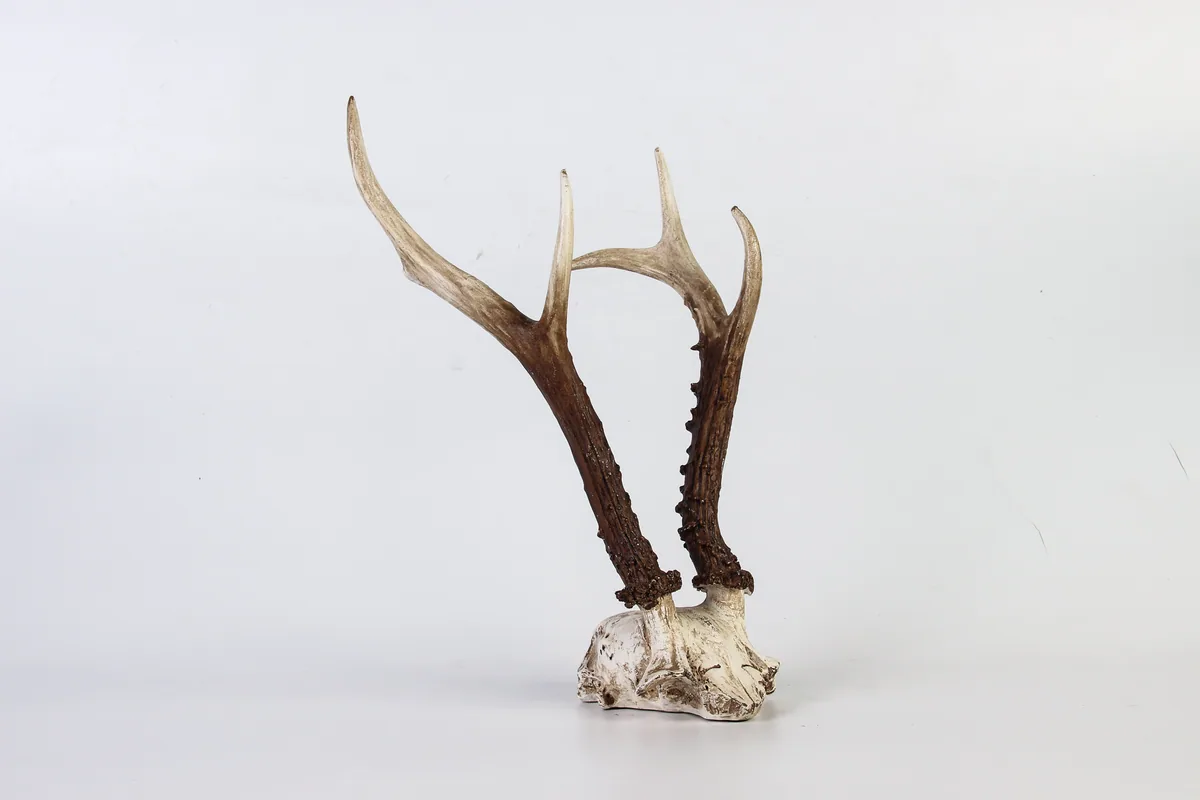
Materials used for skull decor
- Polyresin is the most common choice. It takes fine detail well, holds a painted or aged finish, and can be produced in quantity at a reasonable cost.
- Cold cast bronze mixes metal powder into resin, giving a genuine metallic surface that patinas over time. It suits premium and hospitality specifications.
- Ceramic offers a harder, cooler surface and a precision that suits smaller pieces, though it is less forgiving in transit than resin.
- Plaster and stone composite produce a chalky, mineral finish that reads well in galleries and museum displays.
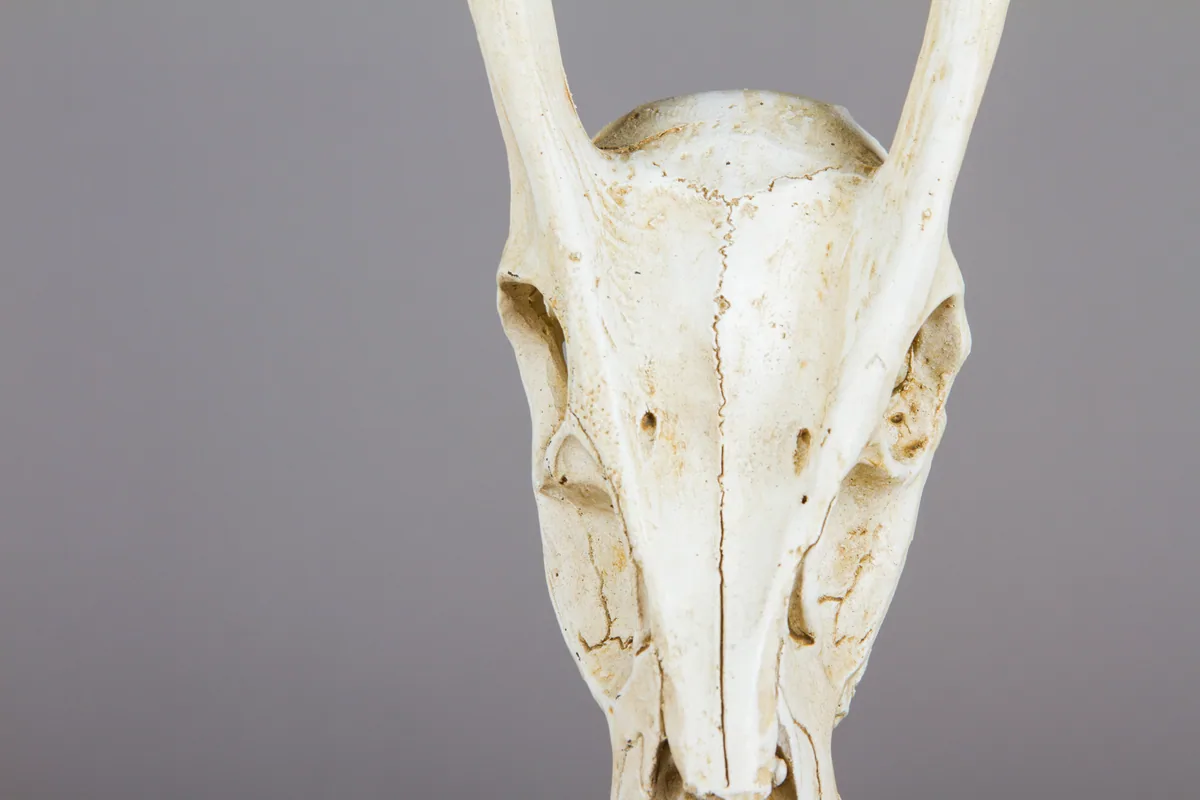
How to tell a replica from a real skull
Look at the weight first. A real skull of comparable size is lighter and more unevenly balanced than a solid cast. Then check the underside and the interior of the eye sockets: a replica usually shows a smooth, uniform surface where a real bone would be porous and irregular.
Finally, check the mounting. Replicas almost always ship with a designed wall bracket or cast base, because the piece is engineered as a product rather than collected as a specimen. If you are buying from a supplier, ask directly what the piece is cast from and whether the mould derives from an original or a sculpture.
What to tell your customers
Retail staff should be able to answer the question in one sentence, because it comes up constantly: this is a cast study, no animal was used, and it is not subject to wildlife trade restrictions. Keeping a short written statement on the product page and in the showroom removes doubt for buyers who care about the answer.
It is also worth stating the material and the finish explicitly. Buyers who assumed resin sometimes complain about weight, and buyers who assumed bronze sometimes complain about the price. Naming the material up front avoids both conversations.
Specifying skull and specimen decor for interiors
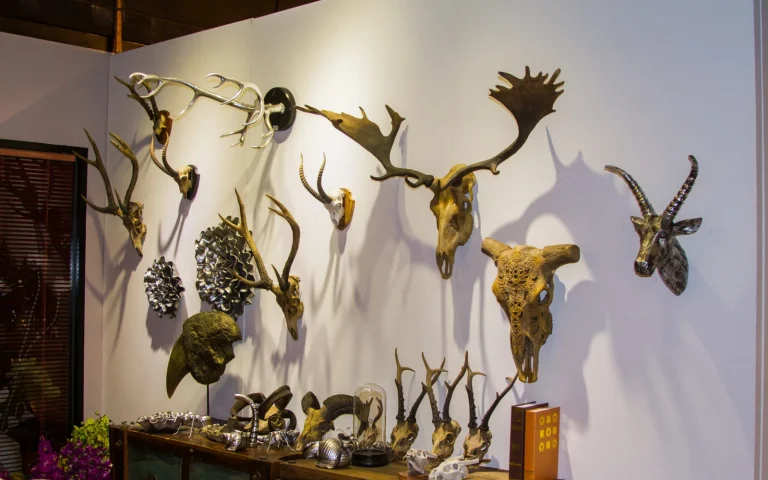
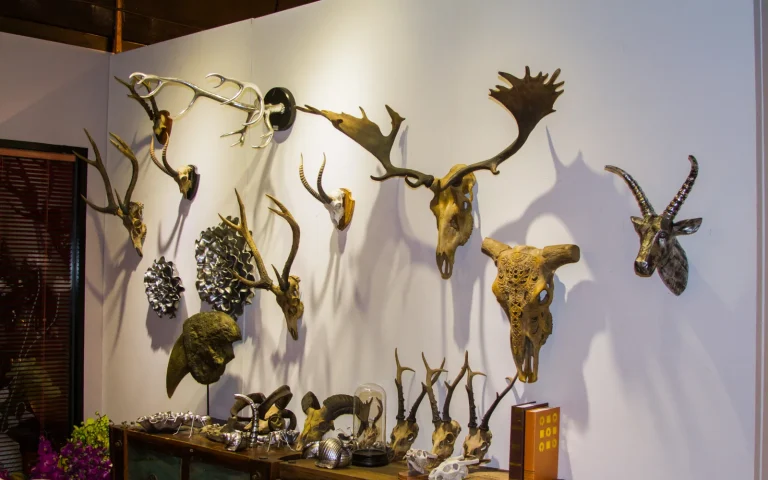
These pieces work best when they are treated as display objects rather than decoration. Give each one clear air around it, place it at eye level or slightly above, and let a single strong piece carry a shelf instead of grouping several similar forms together.
Scale matters more than quantity. A large skull mount can anchor a console or a hospitality corridor on its own, while a small study piece suits a desk or a bookcase where it will be seen close up. Mixed with books, ceramics and one contrasting material such as glass, the arrangement reads as collected rather than themed.
Care and cleaning
Dust a resin or cold cast piece with a soft dry cloth or a soft brush, working into the recessed detail rather than across it. Avoid wet cloths, alcohol and household cleaners, which can lift a painted or patinated finish permanently.
Keep pieces out of direct sunlight and away from radiators, because rapid temperature shifts affect both the finish and the casting over time. When moving a mounted piece, hold the base or the bracket rather than a protruding horn or jaw.
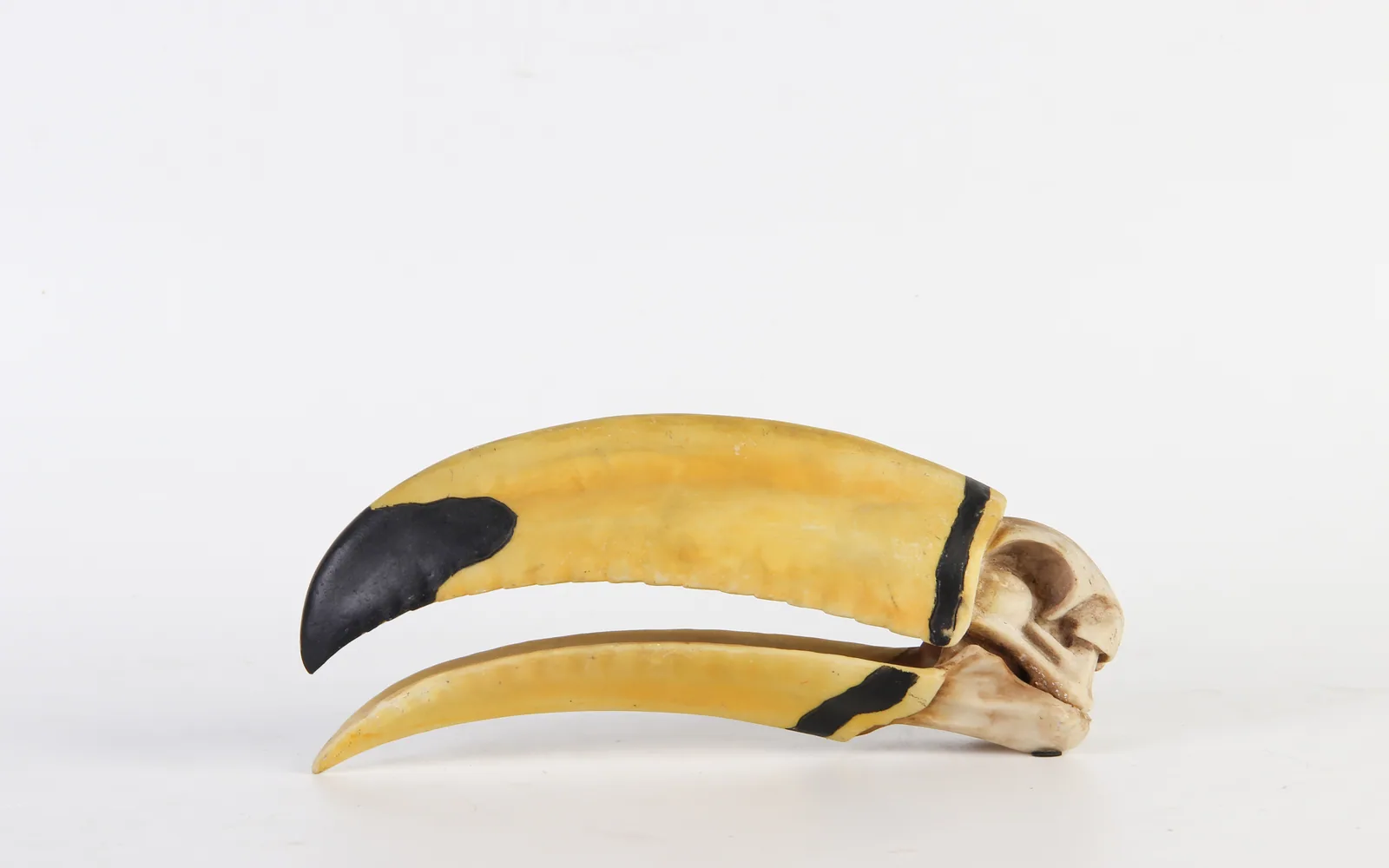
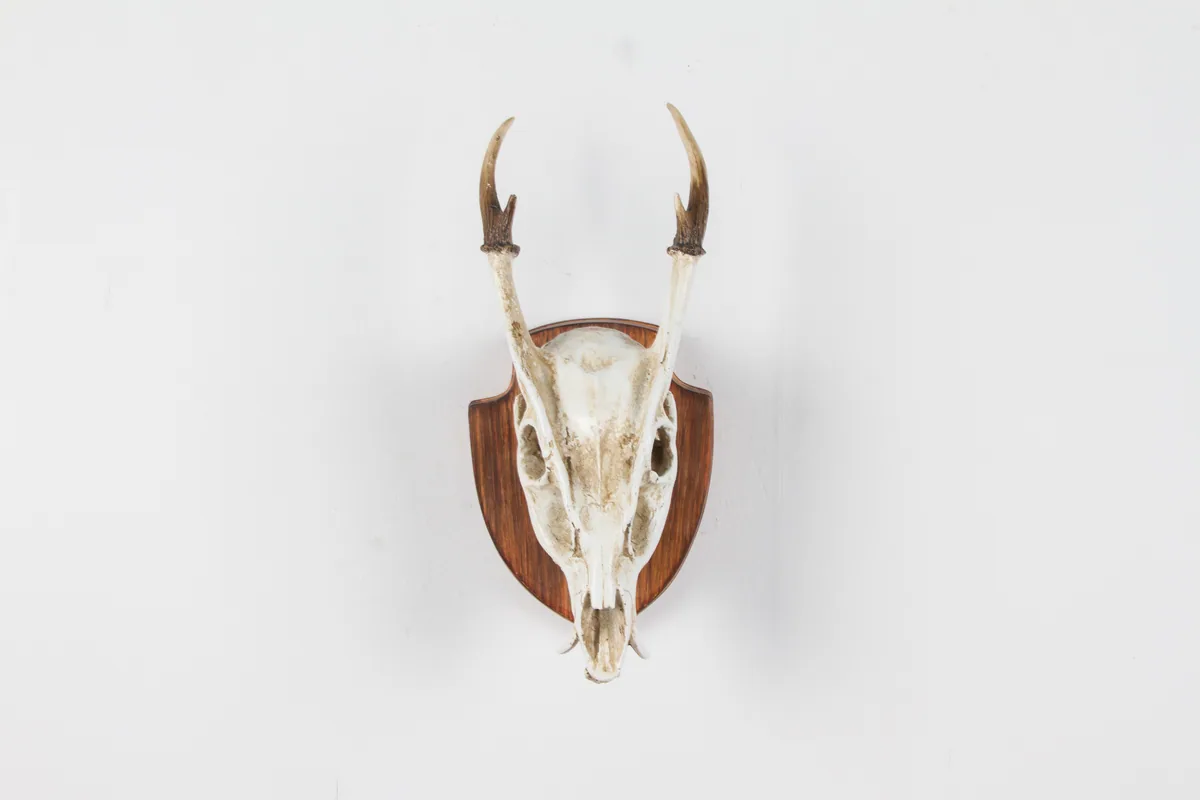
If you are developing a skull or specimen range for your own market, our custom and trade service covers scale, finish and base treatment changes on existing pieces. Ready-made options include our trophy skull wall mounts and the bird skull specimen collection, and the studio profile explains how the pieces are made in Dehua, Fujian.
Frequently asked questions
Are animal skull replicas ethical?
Yes. A replica is cast from a mould and involves no animal in its production, so it avoids the welfare and conservation questions that apply to selling real remains. Many buyers prefer them for exactly this reason.
Is it legal to sell animal skull decor?
Replicas are generally not subject to wildlife trade rules because they contain no animal material. Real specimens may fall under CITES or national legislation and often need permits, so confirm the status of any original before you import or resell it.
How can you tell a real skull from a replica?
A real skull is lighter and more irregular, with porous bone inside the eye sockets and nasal cavity. A replica is uniformly solid, evenly balanced and usually supplied with a purpose-made bracket or cast base.
How do you clean a resin skull mount?
Use a soft dry cloth or brush and work into the recessed detail. Avoid water, alcohol and household cleaners, because they can lift a painted or patinated surface. Keep the piece out of direct sunlight and away from heat sources.
{“@context”:”https://schema.org”,”@type”:”FAQPage”,”mainEntity”:[{“@type”:”Question”,”name”:”Are animal skull replicas ethical?”,”acceptedAnswer”:{“@type”:”Answer”,”text”:”Yes. A replica is cast from a mould and involves no animal in its production, so it avoids the welfare and conservation questions that apply to selling real remains. Many buyers prefer them for exactly this reason.”}},{“@type”:”Question”,”name”:”Is it legal to sell animal skull decor?”,”acceptedAnswer”:{“@type”:”Answer”,”text”:”Replicas are generally not subject to wildlife trade rules because they contain no animal material. Real specimens may fall under CITES or national legislation and often need permits, so confirm the status of any original before you import or resell it.”}},{“@type”:”Question”,”name”:”How can you tell a real skull from a replica?”,”acceptedAnswer”:{“@type”:”Answer”,”text”:”A real skull is lighter and more irregular, with porous bone inside the eye sockets and nasal cavity. A replica is uniformly solid, evenly balanced and usually supplied with a purpose-made bracket or cast base.”}},{“@type”:”Question”,”name”:”How do you clean a resin skull mount?”,”acceptedAnswer”:{“@type”:”Answer”,”text”:”Use a soft dry cloth or brush and work into the recessed detail. Avoid water, alcohol and household cleaners, because they can lift a painted or patinated surface. Keep the piece out of direct sunlight and away from heat sources.”}}]}