Scandinavian Sculpture Styling: How to Add Art Without Clutter
Scandinavian sculpture styling is not about filling a shelf with pale objects. It is about giving a few forms enough space, daylight and contrast to be seen. A quiet luxury home decor approach can help, but the Nordic version usually feels lighter and less formal: fewer materials, a clearer relationship with natural light and a willingness to leave the wall empty.
What Scandinavian sculpture styling means
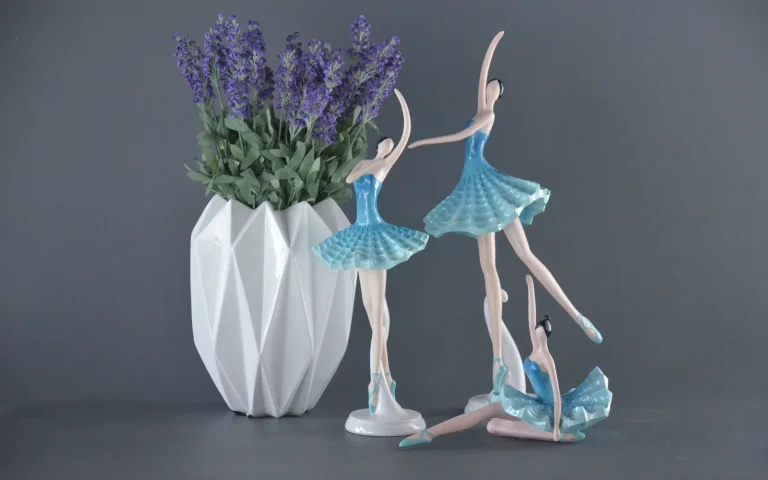
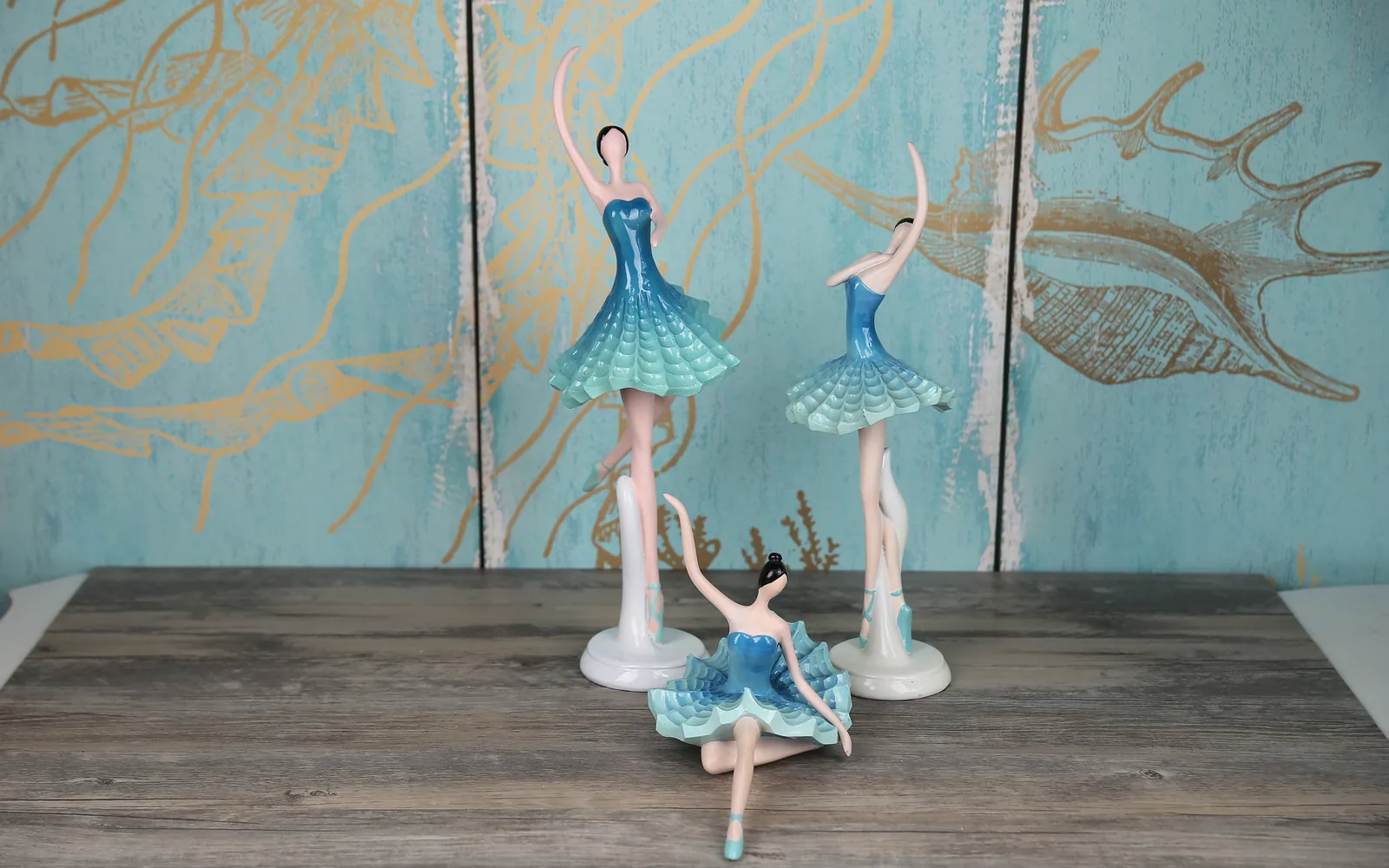
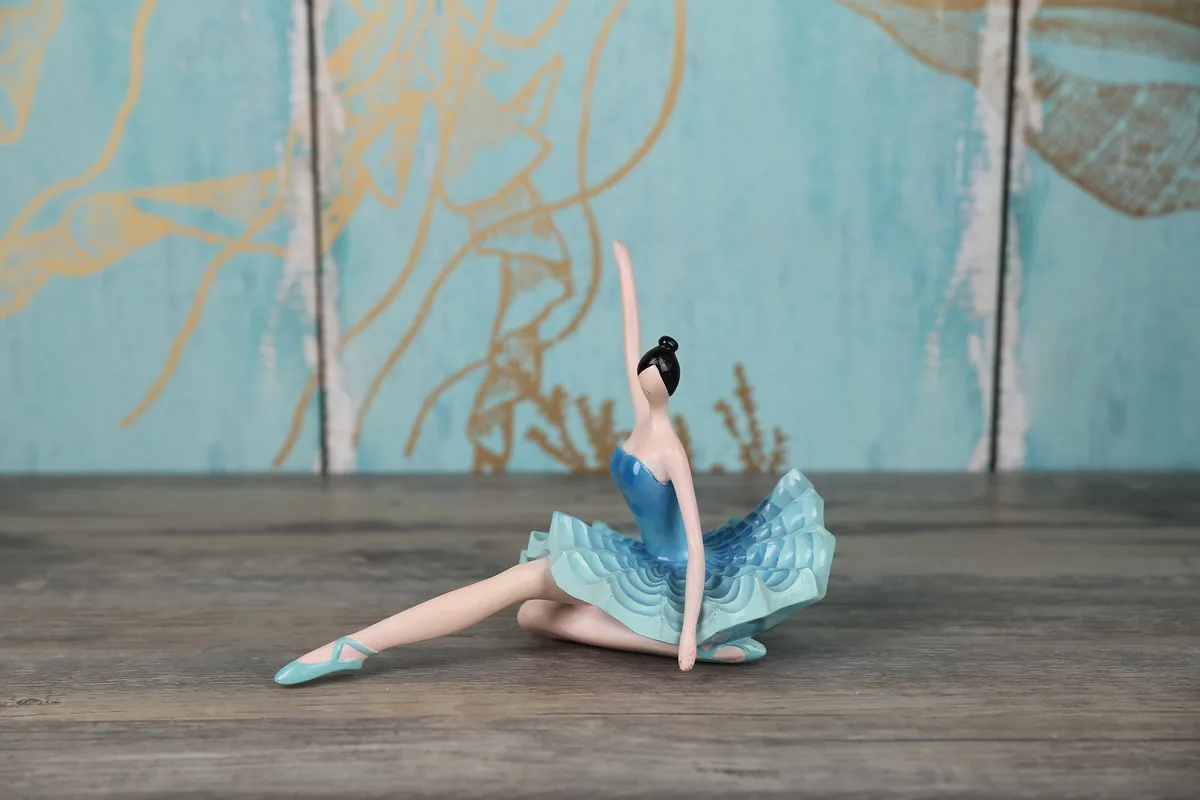
Nordic interiors tend to value functional shapes, honest materials and a calm visual rhythm. Sculpture fits when it adds a silhouette the furniture cannot provide: a curved shoulder, a dancer’s raised arm or the irregular edge of a cast form. It should not be there only to fill a gap.
Choose one object that carries the idea, then let the room’s architecture and textiles support it. That principle works in a small apartment as well as a large house because it depends on proportion rather than quantity.
Choose one silhouette, not a set
A set of matching ornaments makes a shelf look purchased as a package. A single figurative piece has more presence because the eye can settle on it. A warm minimalist interior often needs exactly that kind of focal point, especially when the furniture is low and the walls are quiet.
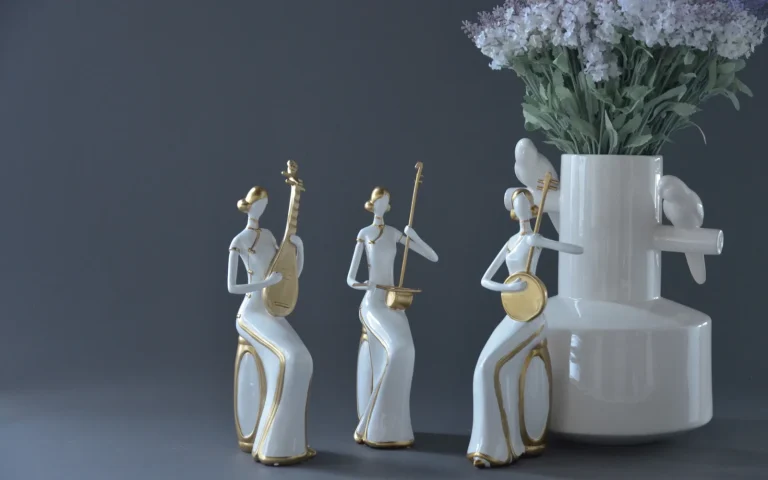
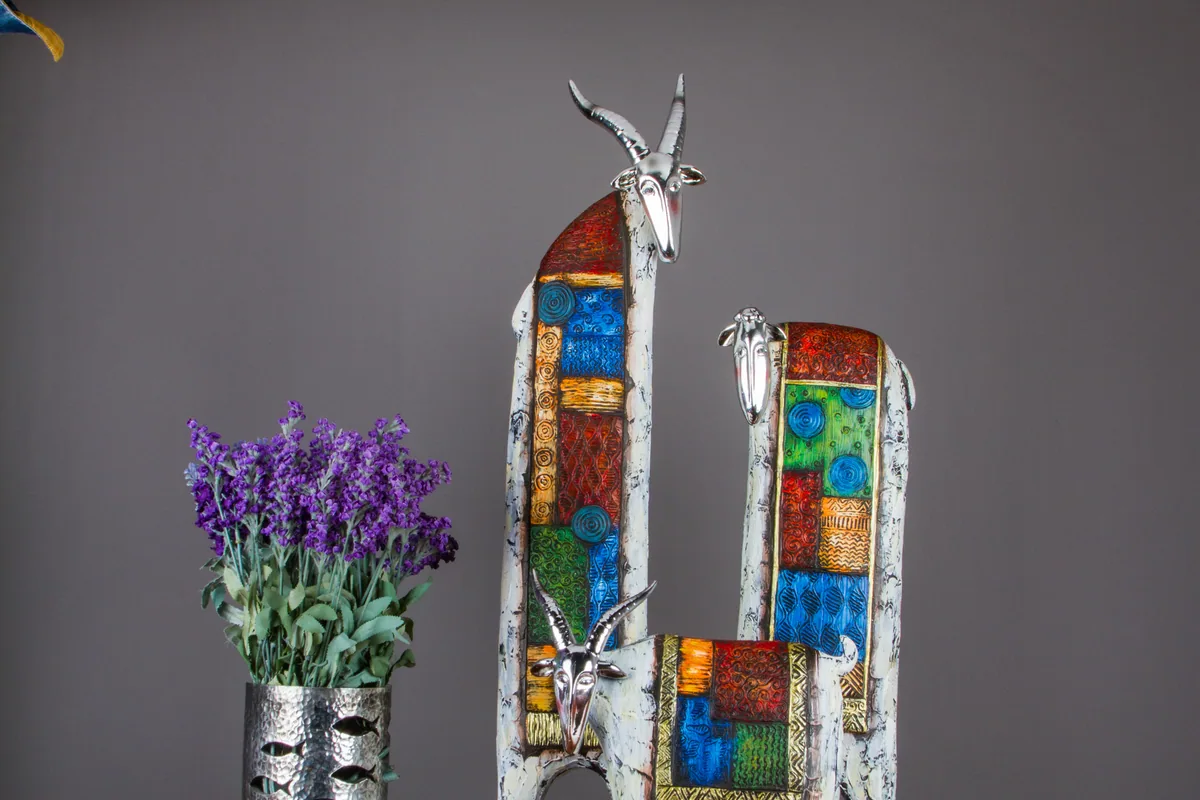
If you want more than one piece, vary the height and pose. A standing figure beside a seated one creates a relationship, while two identical figures in a row become repetition. Keep the group small enough that each piece still reads as an individual object.
Use pale and dark finishes deliberately
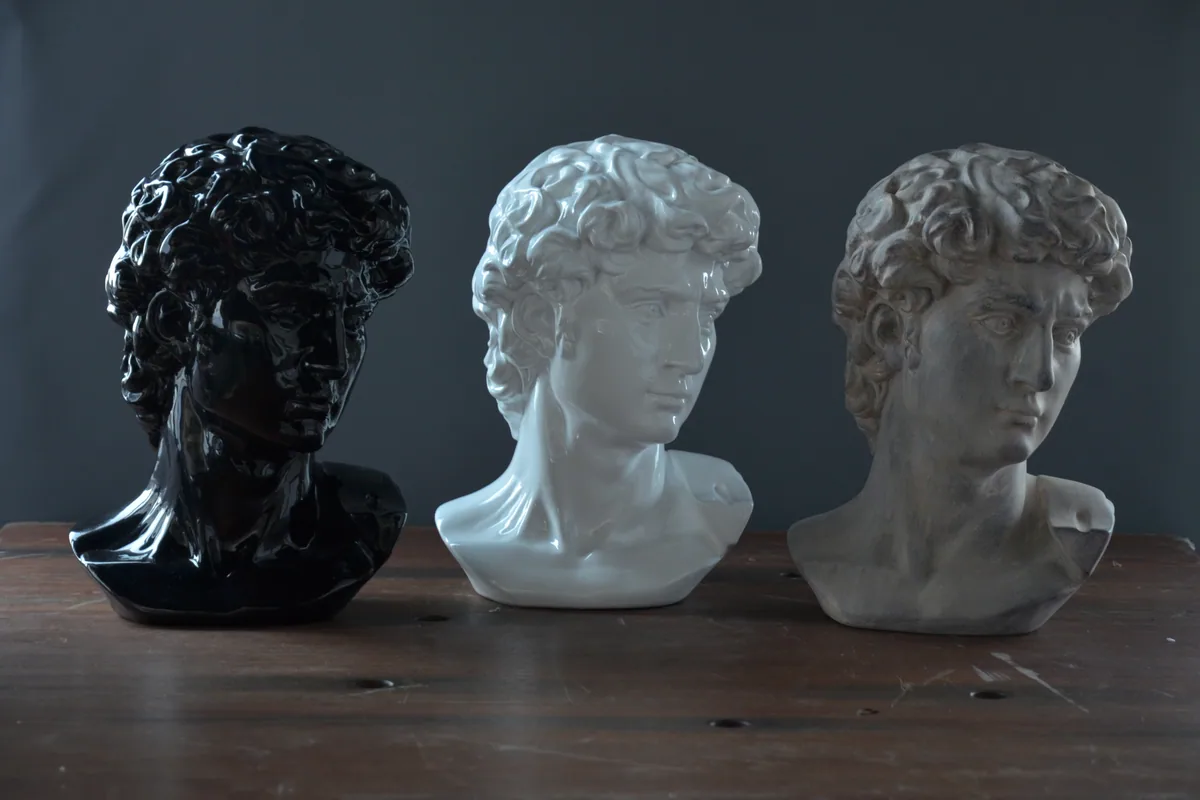
Scandinavian rooms often start with pale timber, white walls and soft grey textiles. A white or chalk-finished sculpture can disappear into that background, which is sometimes the goal. A black, bronze or deep mineral finish gives the same silhouette more weight and creates a useful anchor.
For European classic decor, a bust can feel too formal if it is highly polished or ornate. A matte plaster finish, a dark patina or a simple white cast makes the classical reference feel more contemporary. The form stays, but the surface stops shouting.
Place sculpture at human height
Sculpture is usually most effective at seated or standing eye level. A console beside a sofa, a sideboard in a dining room or a shelf next to a chair lets the viewer see the face, posture and surface without looking up. High shelves are better for books and storage than for detailed figures.
Leave breathing room around the object. A bust needs space at the shoulders; a dancer needs room for the extended arm; a group needs a shared baseline. If the piece touches the edge of a shelf or the side of a lamp, the composition feels cramped even when the object itself is beautiful.
Mix figurative and abstract forms
A figurative piece brings narrative, while an abstract form brings texture and volume. Put them together only when they share a material or a proportion. A smooth white bust and a rough stone bowl can work because the contrast is controlled; a glossy figurine beside a highly patterned vessel usually competes.
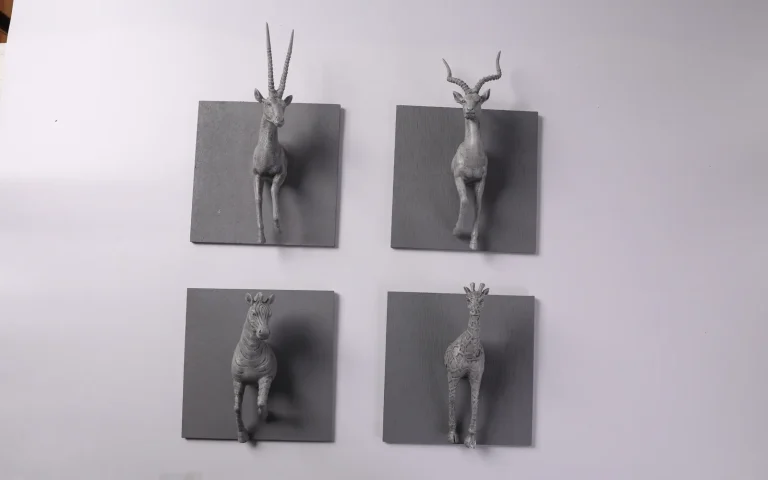
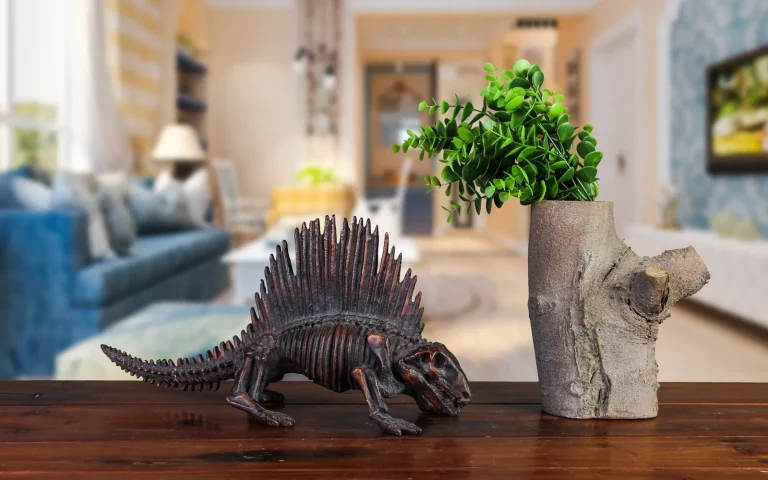
Transitional interior accessories often sit between styles, which makes them useful in a Nordic room that is not strictly minimal. A classical head in a matte finish or a small animal figure with hand-painted detail can bridge traditional and contemporary furniture without becoming a theme.
Use negative space and daylight
Nordic light changes through the day, so a sculpture’s surface should be tested in the actual room. A matte finish holds soft shadows and reads well in diffuse daylight. A glossy finish can produce a bright reflection that becomes the dominant feature rather than the form.
Keep at least one third of a shelf or wall empty. That empty area is what makes the object appear chosen rather than stored. If the room has a strong window line, let the sculpture sit slightly off centre so it does not block the view or compete with the frame.
Rotate pieces with the season
A small collection can stay interesting if it is edited rather than expanded. Rotate one sculpture out and another in when the room starts to feel static. Store the resting piece in acid-free tissue, away from direct sunlight and damp, and clean the shelf before the new arrangement goes back.
For decorative figurines with painted detail, dust with a soft dry brush and avoid water on gilded or hand-finished surfaces. A careful rotation keeps the collection fresh without requiring a new purchase every season.
A simple styling formula
- Clear the surface and choose one anchor sculpture.
- Place it slightly off centre at seated eye level.
- Add one supporting object of a different height or material.
- Remove anything that repeats the same silhouette.
- Check the arrangement in daylight and again at night.
- Leave at least one third of the surface empty.
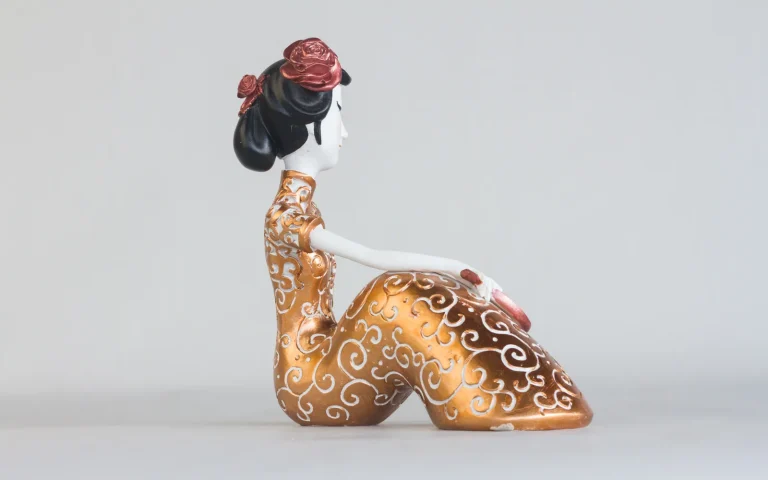
Our qipao lady figurine and caravan camel figure offer two different scales for a Nordic display, while the studio profile explains the finishes available across the collection. Browse the current collection to compare silhouettes and materials.
Further reading: Design Museum London, The Met European Sculpture and Decorative Arts.
Frequently asked questions
How do you style sculpture in a Scandinavian interior?
Use one anchor piece, place it at seated or standing eye level and leave at least one third of the surface empty. Choose a matte or low-contrast finish if the room is very pale, or a darker finish when the composition needs weight.
Should Scandinavian sculpture match perfectly?
No. Matching sets can look like a catalogue display. A better result comes from one strong form supported by a different height, material or texture, as long as the pieces share a clear visual rhythm.
Can classical busts work in a Nordic room?
Yes, when the finish is restrained. A matte plaster, chalk white or dark patina bust can bridge European classic decor and contemporary Nordic furniture without the ornate detailing that makes a room feel formal.
How do you clean painted Scandinavian figurines?
Dust with a soft dry brush or microfibre cloth and avoid water on painted or gilded surfaces. Keep the piece out of direct sunlight, handle it by the base and test any cleaner on an unseen area first.
{“@context”:”https://schema.org”,”@type”:”FAQPage”,”mainEntity”:[{“@type”:”Question”,”name”:”How do you style sculpture in a Scandinavian interior?”,”acceptedAnswer”:{“@type”:”Answer”,”text”:”Use one anchor piece, place it at seated or standing eye level and leave at least one third of the surface empty. Choose a matte or low-contrast finish if the room is very pale, or a darker finish when the composition needs weight.”}},{“@type”:”Question”,”name”:”Should Scandinavian sculpture match perfectly?”,”acceptedAnswer”:{“@type”:”Answer”,”text”:”No. Matching sets can look like a catalogue display. A better result comes from one strong form supported by a different height, material or texture, as long as the pieces share a clear visual rhythm.”}},{“@type”:”Question”,”name”:”Can classical busts work in a Nordic room?”,”acceptedAnswer”:{“@type”:”Answer”,”text”:”Yes, when the finish is restrained. A matte plaster, chalk white or dark patina bust can bridge European classic decor and contemporary Nordic furniture without the ornate detailing that makes a room feel formal.”}},{“@type”:”Question”,”name”:”How do you clean painted Scandinavian figurines?”,”acceptedAnswer”:{“@type”:”Answer”,”text”:”Dust with a soft dry brush or microfibre cloth and avoid water on painted or gilded surfaces. Keep the piece out of direct sunlight, handle it by the base and test any cleaner on an unseen area first.”}}]}