Private Label Home Decor Manufacturer: A Buyer’s Guide
A private label home decor manufacturer should do more than put your name on an existing box. The right partner helps turn a product idea into a repeatable specification, protects the artwork and product story, and documents the finish, packaging and inspection requirements clearly enough for every production run to follow.
This guide is for retailers, design studios and hospitality buyers comparing custom home decor manufacturing routes. It separates private label from generic wholesale, explains what the buyer should own and provides a practical approval sequence without assuming a particular MOQ or lead time.
What does a private label home decor manufacturer provide?
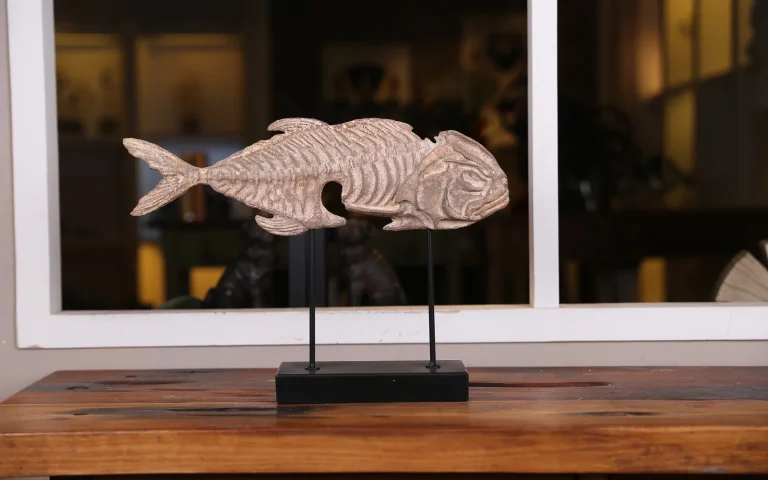
A private label home decor manufacturer produces an object for a buyer’s brand rather than supplying it under the factory’s own name. The product may start from an existing ODM decor supplier form, a modified catalogue piece or a new design developed for the buyer. The label, packaging, photography and sales story are controlled by the brand.
The exact division of ownership should be written down. Ask who owns the mould, artwork, packaging dieline, product photography and any new sculptural design. A clear agreement prevents the same visual assets or product story from being reused in a way that undermines the private-label range.
Start with the product, not the label
Private label packaging cannot rescue a product that has no clear use, scale or audience. Begin with the object: material, dimensions, weight, finish, display setting and the customer who will buy it. A decorative figurine for a gift shop has different requirements from a sculptural accessory for a hotel suite.
Write a short product statement that explains what the object is and why it belongs in the range. Then build the technical brief around it. That statement will later shape the retail copy, photography, packaging and sales conversation, so it should be agreed before samples are ordered.
Choose OEM, ODM or a hybrid route
OEM usually means the buyer brings the design or a detailed specification and the manufacturer produces it. ODM starts with a supplier-developed design that can be adapted through finish, scale or packaging. Many private-label projects sit between the two: a buyer begins with a proven form but changes the colour, base, carton and brand story.
Compare the routes on control, speed and risk. A new form offers the most differentiation but requires more development. An adapted ODM piece can be faster to sample, but the buyer must confirm that the changes are substantial enough for the market position. The best route depends on how much proprietary value the brand needs.
Build the home decor sampling brief
Home decor sampling works best when the brief uses references rather than adjectives alone. Supply a front, side and back reference, colour targets, finish photos, dimensions and the environment where the object will be seen. Include unacceptable variations such as a glossy finish where a matte surface is required.
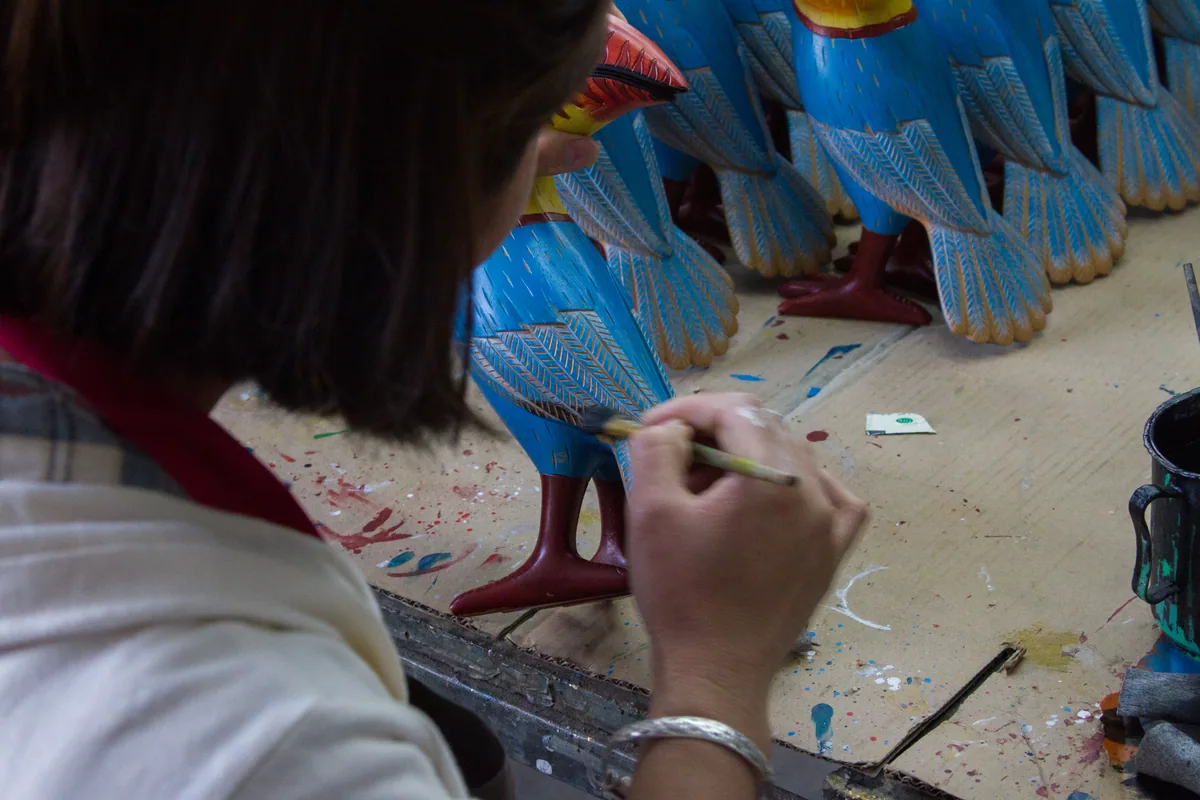
For a painted piece, show the approved colour under daylight and warm shop lighting. For a metallic finish, explain whether the target is bright, brushed, antique or dark. For a sculptural form, mark the critical silhouette and the areas where hand finishing is allowed.
Approve the sample in stages
Do not ask one sample to answer every question at once. Approve the form first, then the finish, then the retail packaging and finally the packed master carton. This separates a design issue from a surface issue and makes it easier to see whether the manufacturer can repeat the approved result.
Keep the signed sample in good condition and photograph it from every relevant angle. Record the date, revision and approval status. A factory cannot reliably match an email thread full of conflicting images; it needs one controlled reference that both sides accept.
Control colour, texture and touch-up standards
White label home accessories can fail at the finish stage even when the casting is correct. Painted detail may drift, metallic coatings may show brush marks and an antique wash may become too dark under a different light. Define the acceptable range rather than asking for an exact colour match that may be impossible across materials.
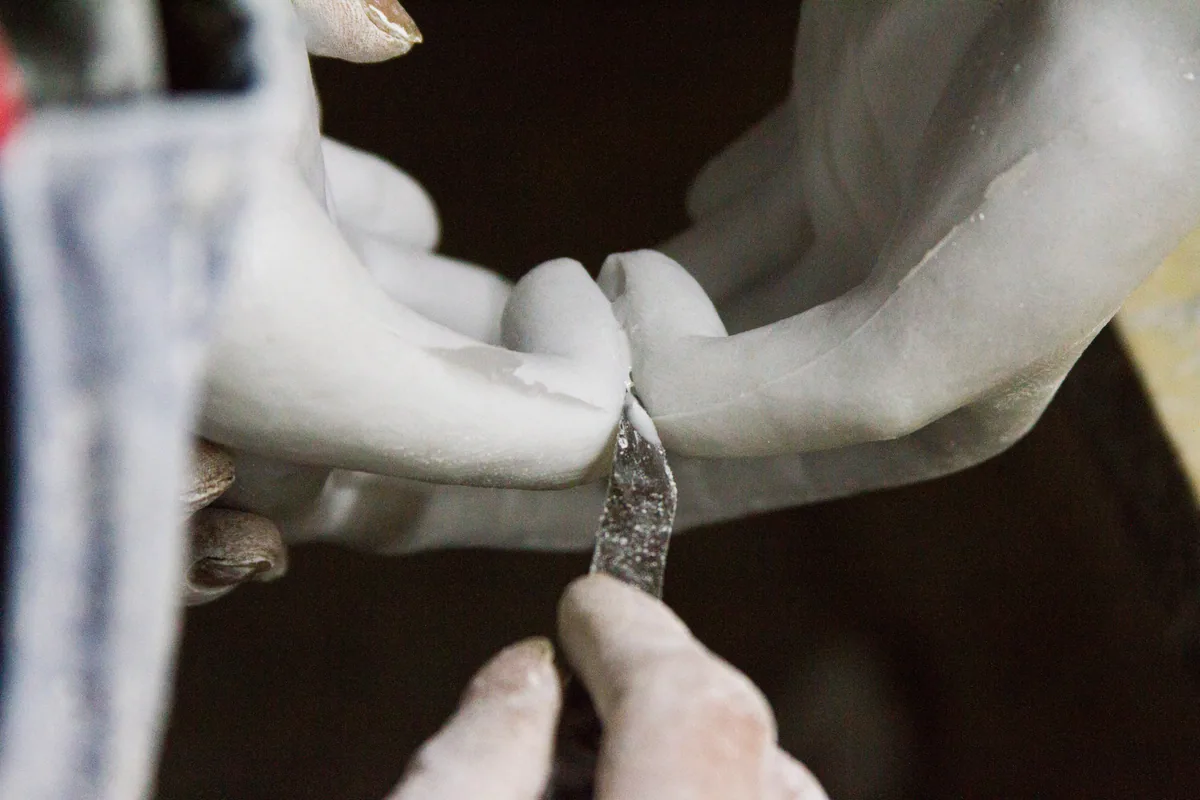
Use a physical master sample and a simple inspection checklist. Check the front face, visible sides, base and any area that will be touched during handling. Decide whether small touch-ups are acceptable on the base or hidden underside, but keep the front face consistent.
Plan private label packaging and product data
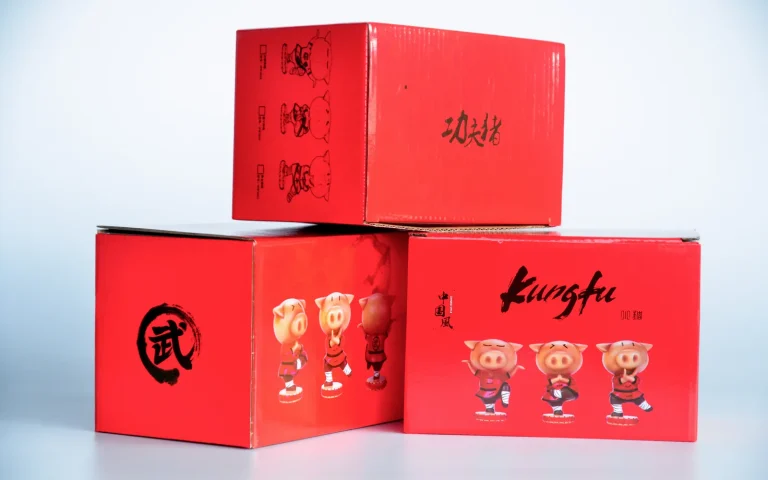
Private label packaging should be designed with the product, not after it. The box needs internal protection, a clear product name, material and care information, a barcode position and enough room for the retail story. If the product crosses borders, the importer and exporter must also confirm origin, labeling and document requirements.
Keep approved packaging files in one version-controlled folder. Name the dieline, artwork, colour reference and barcode file with a revision number. This prevents a printer from using an old logo or a factory from packing the current product in a discontinued box.
Use a pre-production checklist
- Confirm who owns the design, mould, artwork and photography.
- Approve the product and finish sample against written criteria.
- Test the retail pack and master carton with the finished object inside.
- Record dimensions, weight, materials and care instructions.
- Check labels, barcodes, origin marks and private-label claims.
- Agree the inspection points and the approved reference sample.
- Keep one current revision of every specification file.
Choose a manufacturer that can explain the process
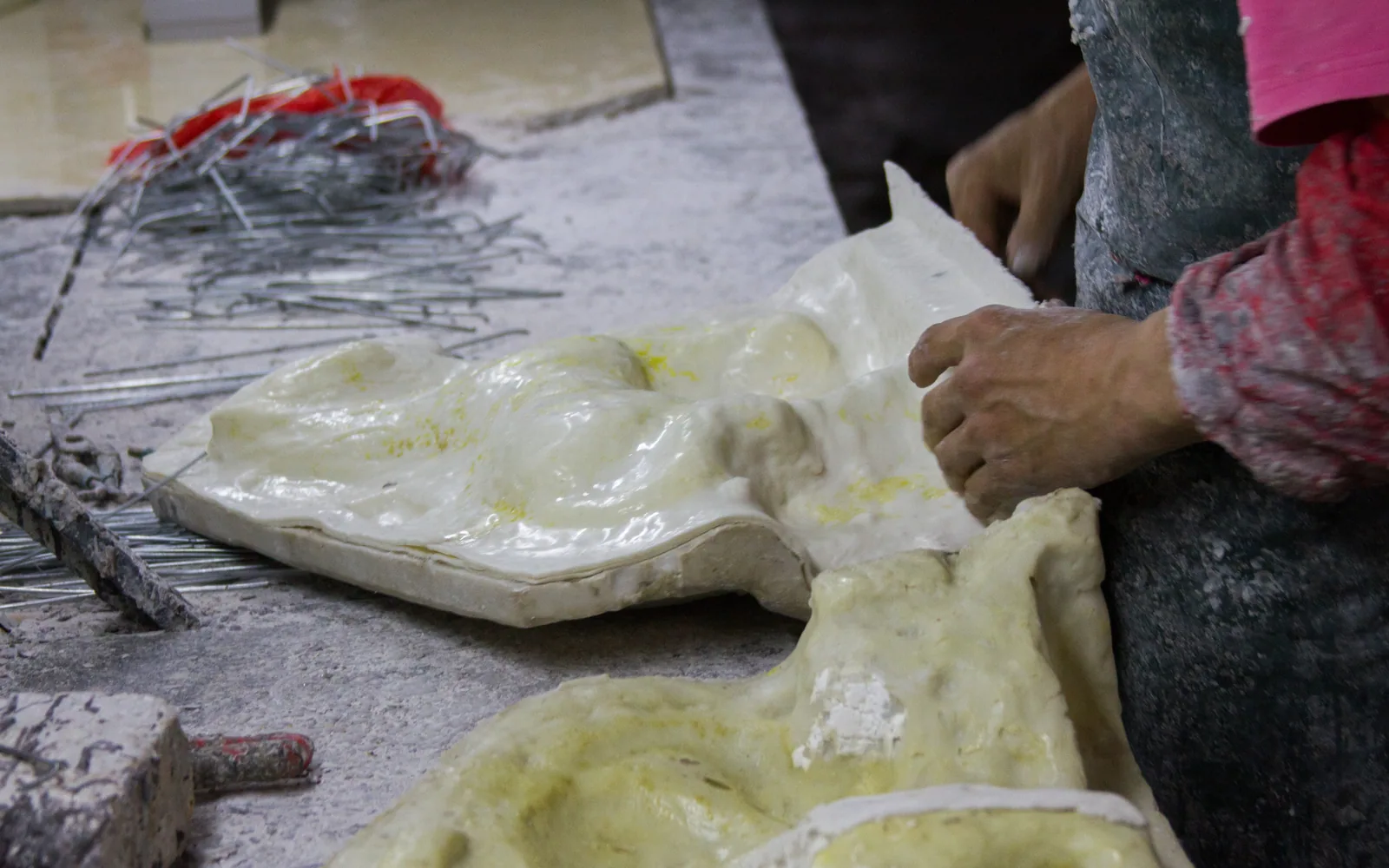
Ask how the product will be cast, finished, inspected and packed. A capable private label home decor manufacturer should be able to explain the sensitive steps and the points where variation is most likely. Vague assurances are less useful than a clear sample, an inspection standard and a documented route from design to carton.
Saint Art is based in Dehua, Fujian, and was founded in 2023. Its experience covers resin, metal, ceramic, crystal glass, fabric, shell and bamboo, with OEM and ODM work supported through the custom and trade page. The company profile gives the manufacturing and Canton Fair background.
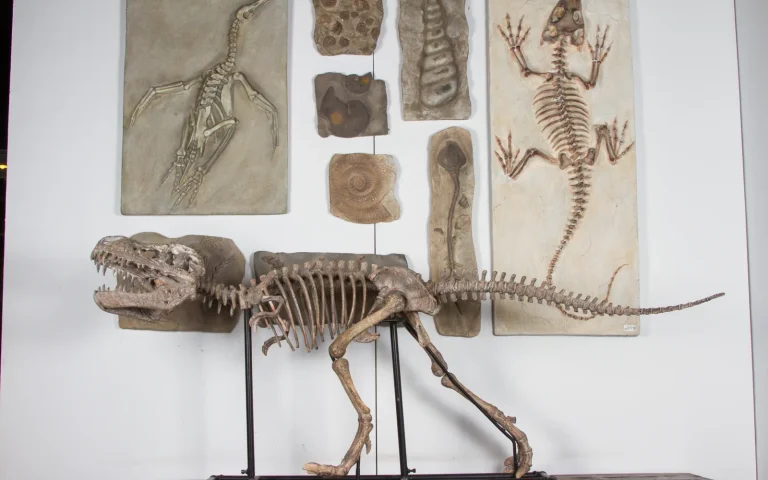
Review the custom dinosaur skeleton as an example of project-specific development, then use the case studies and the shop collection to compare scale and finish across the range.
What makes a private-label programme repeatable?
A repeatable programme has a controlled product reference, an approved finish, a tested pack and a clear inspection record. The brand also needs a reliable content set so the same product can be presented consistently across the website, catalogue and sales materials.
Private label is not simply a logo change. It is a shared specification that protects the design, the customer experience and the manufacturer’s ability to produce the same result again. When ownership, sampling and packaging are settled early, custom home decor manufacturing becomes a manageable long-term relationship rather than a series of one-off approvals.
Further reading: USPTO trademark basics for brand owners, US Customs import and export guidance.
Frequently asked questions
What is a private label home decor manufacturer?
It is a manufacturer that produces decorative objects for a buyer’s brand instead of selling them under its own name. The brand controls the label, packaging and sales story, while the supplier follows an agreed product specification.
What should a private label decor brief include?
The brief should include dimensions, material, finish references, target environment, packaging needs, logo files, barcode placement and acceptance criteria. Clear photographs and a signed sample help prevent conflicting interpretations later.
How is ODM different from private label?
ODM describes a supplier-developed design that may be adapted for different buyers, while private label describes the brand under which the finished product is sold. A private-label programme can use an ODM base, a fully custom design or a combination of both.
Who should own the product design and packaging artwork?
Ownership should be stated in the commercial agreement before production. The buyer normally needs control of its trademark, packaging artwork and commissioned design, while the supplier may retain certain mould or process rights unless those are transferred.
{“@context”:”https://schema.org”,”@type”:”FAQPage”,”mainEntity”:[{“@type”:”Question”,”name”:”What is a private label home decor manufacturer?”,”acceptedAnswer”:{“@type”:”Answer”,”text”:”It is a manufacturer that produces decorative objects for a buyer’s brand instead of selling them under its own name. The brand controls the label, packaging and sales story, while the supplier follows an agreed product specification.”}},{“@type”:”Question”,”name”:”What should a private label decor brief include?”,”acceptedAnswer”:{“@type”:”Answer”,”text”:”The brief should include dimensions, material, finish references, target environment, packaging needs, logo files, barcode placement and acceptance criteria. Clear photographs and a signed sample help prevent conflicting interpretations later.”}},{“@type”:”Question”,”name”:”How is ODM different from private label?”,”acceptedAnswer”:{“@type”:”Answer”,”text”:”ODM describes a supplier-developed design that may be adapted for different buyers, while private label describes the brand under which the finished product is sold. A private-label programme can use an ODM base, a fully custom design or a combination of both.”}},{“@type”:”Question”,”name”:”Who should own the product design and packaging artwork?”,”acceptedAnswer”:{“@type”:”Answer”,”text”:”Ownership should be stated in the commercial agreement before production. The buyer normally needs control of its trademark, packaging artwork and commissioned design, while the supplier may retain certain mould or process rights unless those are transferred.”}}]}