Wholesale Decorative Bookends: A Retail Buying Guide
Wholesale decorative bookends sit between useful home accessories and collectible sculpture. For a buyer, that makes them especially interesting: they can be sold as a practical gift, a shelf styling object or part of a coordinated hospitality scheme. The challenge is to choose pieces that hold books securely, survive retail handling and still look distinctive after the packaging is removed.
What makes wholesale decorative bookends retail-ready?
Retail-ready decorative bookends need enough mass or friction to hold a row of books, a flat base that sits reliably on different shelf surfaces and a finish that tolerates repeated handling. They should also photograph well from several angles, because the product image has to communicate weight, detail and scale before the customer sees the piece in person.
Start with the job the object must do. A pair for a home bookcase has different requirements from a display piece in a hotel lounge or a gift shop counter. The retail price, box dimensions and intended shelf depth all influence the right form, finish and construction.

Test weight, balance and shelf contact
A bookend only works when its centre of gravity and base support the books without tipping. Ask for a sample with the intended number of books and test it on a smooth shelf, a painted surface and a slightly uneven timber board. The base should sit without rocking, and the contact area should be broad enough to resist sliding.
Weight is not the only measure of stability. A well-shaped base, a concealed non-marking pad and a firm book-support face can do more than a heavy object with a narrow footprint. If the range includes metal bookends, compare the packed weight and shelf load with a lighter cast alternative. A heavier piece can feel more substantial, but it also raises freight cost and may require stronger packaging.
Compare materials and finishes
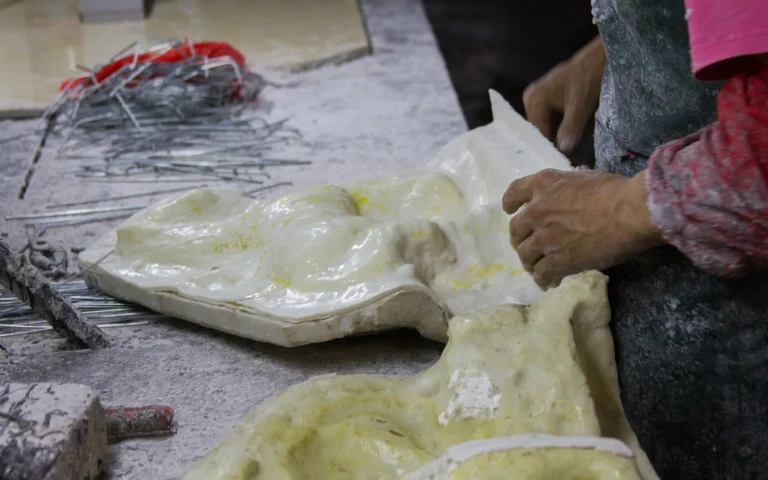
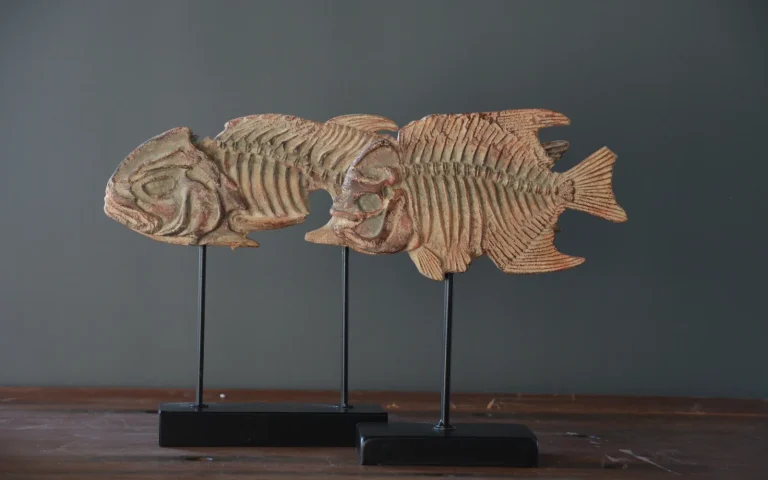
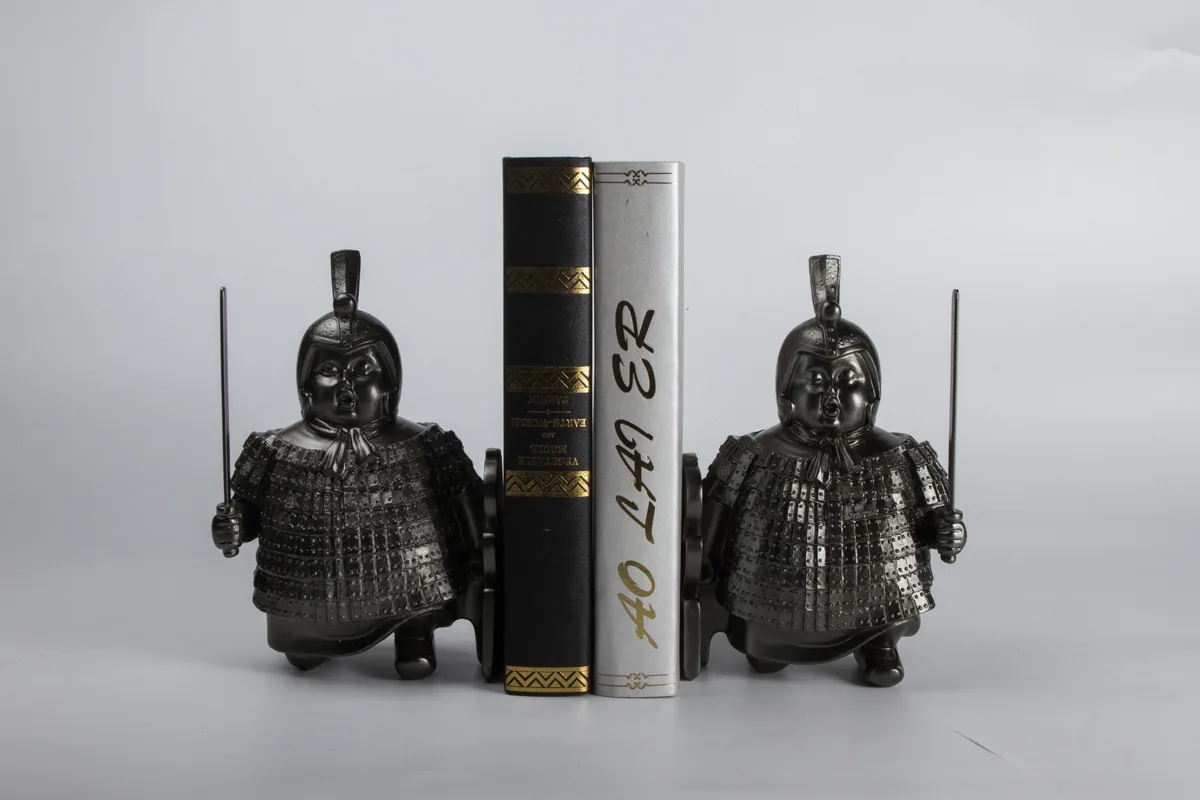
Resin can reproduce fine faces, folds, armour and natural texture while keeping a sculptural form lighter than solid metal. Metal adds weight and allows a slender structural profile, but the finish may show fingerprints or require more careful protection. Ceramic can offer a crisp glazed surface, while wood and stone can support a quieter, material-led collection.
Ask how the finish is applied and how it will age. Painted detail, cold-cast metallic surfaces and plated finishes behave differently when cleaned or handled. A matte finish can hide small marks, while a high gloss can look premium but show every fingerprint. For retail display accessories, the right level of sheen depends on the surrounding assortment and the lighting in the store.
Build a merchandising story
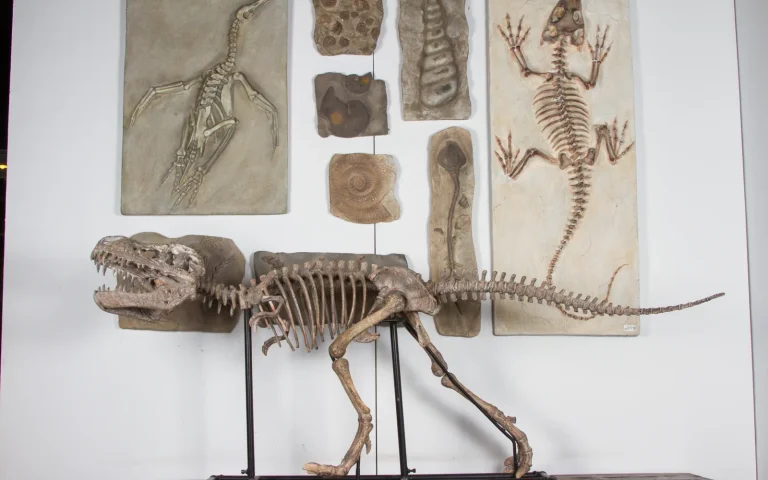
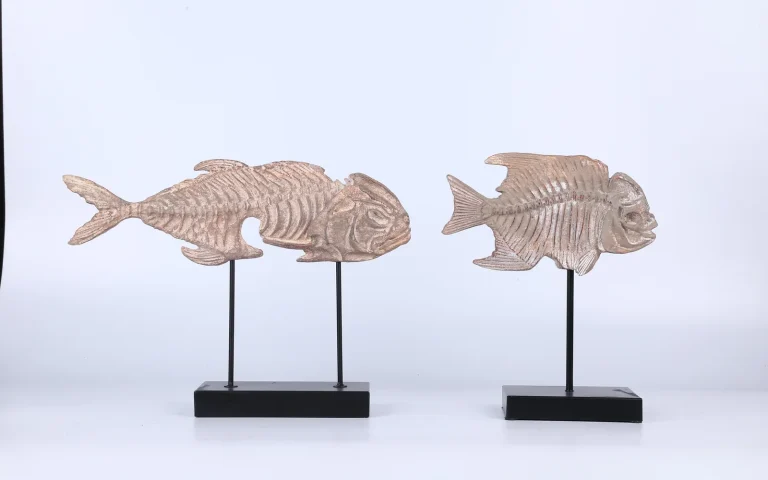
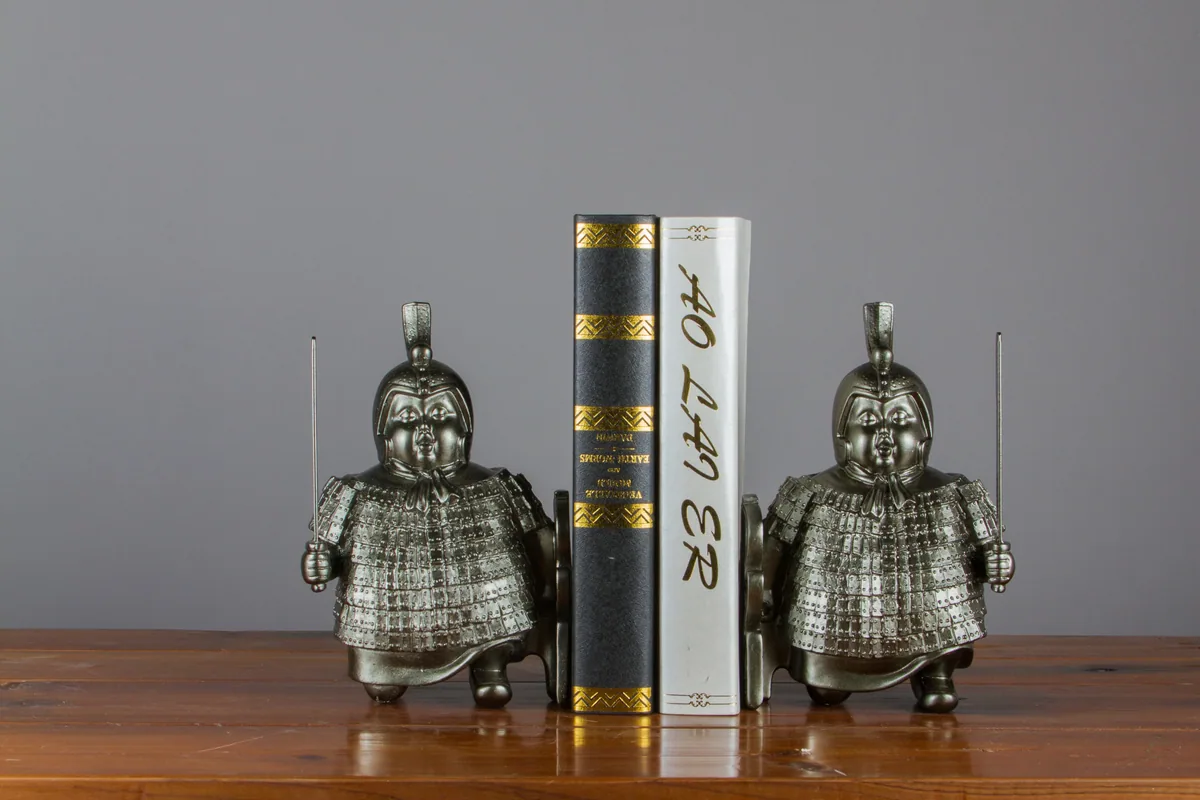
Bookends are easy to merchandise because they can be shown in use. A simple shelf set with a few art books, a small vessel and one pair of bookends tells a clearer story than a product photographed alone. Vary the arrangement by market: a library-inspired display suits natural-history gifts, a dark sculptural pair suits hospitality accessories and a lighter finish may suit a coastal or Nordic assortment.
Offer at least two ways to buy. A matched pair is the obvious gift unit, while a single bookend can work as a desktop sculpture or a lower-entry item. Keep the packaging and product naming consistent so retailers can mix finishes without creating a confusing shelf.
Specify bookend packaging before production
n
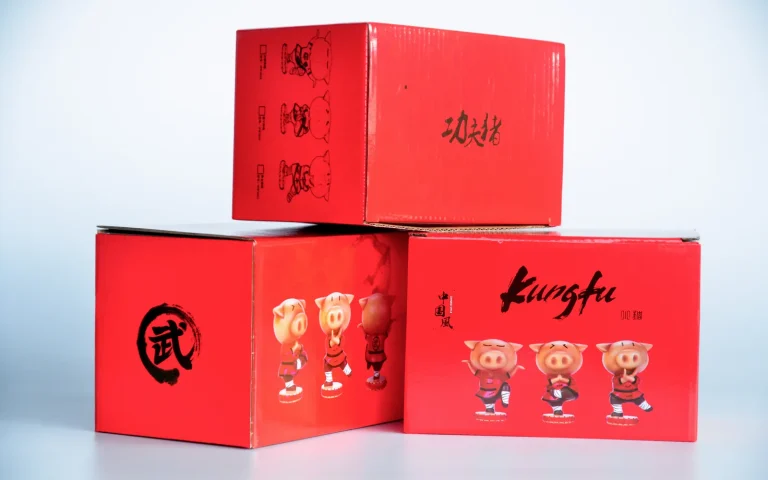
Bookend packaging needs to protect protruding heads, arms and support faces while keeping the box compact. Ask for a drop test and an inspection of the inner fit, because a visually attractive box that allows movement can still cause chipped edges. Include a care card and a short material description so the retailer can answer questions at the counter.
n
If the object is sold as a pair, confirm that both pieces are protected separately and packed in the correct orientation. A printed story card can explain the source of the form, but it must not make an unsupported material claim. Clear product naming, dimensions and care guidance are more useful to a buyer than a long decorative insert.
Use custom development to fit the range
Custom development can adjust scale, finish, base treatment and packaging for a particular retail or hospitality programme. A buyer may need a smaller footprint for apartment shelves, a darker finish for a hotel library or a private-label card for a museum shop. The brief should include reference images, shelf dimensions, intended book load and the desired presentation.
Saint Art is based in Dehua, Fujian, and was founded in 2023. Its work covers resin, metal, ceramic, crystal glass, fabric, shell and bamboo, with OEM and ODM services available through the custom and trade page. The company profile explains the design, manufacturing and export context behind the collection.
A practical sourcing checklist
- Test a sample with the books or display weight the customer will actually use.
- Check the base for rocking, sharp edges and non-marking protection.
- Compare the visual finish under warm, cool and daylight conditions.
- Confirm packed dimensions, carton quantity and replacement parts.
- Review the care card and the material description for accuracy.
- Photograph the pair in use as well as on a plain background.
Use the neoclassical golf bookend as a reference for how a figurative object can combine display and function. The wider Saint Art shop shows how bookends can sit beside figurines and wall pieces in a coordinated assortment.
Why bookends deserve a place in the assortment
Bookends solve a real problem and create an emotional reason to buy. They can mark a bookshelf, finish a console or become a small sculpture that happens to hold books. For retailers, that dual role supports gifting, home styling and repeat purchases across different rooms and price points.
The strongest selection is not the largest one. It is a focused range with clear differences in material, scale and story, supported by useful photography and packaging. When the product is stable, comfortable to handle and easy to explain, wholesale decorative bookends become more than shelf filler: they become a repeatable category with a clear retail purpose.
Further reading: Library of Congress book preservation guidance, ISTA transit packaging test standards.
Frequently asked questions
What weight should a decorative bookend have?
There is no universal weight because stability depends on the base shape, centre of gravity, shelf surface and number of books. Test a sample with the intended load and choose the lightest construction that stays secure without sliding.
Are metal bookends better than resin bookends?
Metal can add weight and support a slim structural form, while resin can reproduce complex sculpture and reduce packed weight. The better choice depends on shelf load, finish, freight cost and whether the object is primarily functional or decorative.
How should wholesale bookends be packaged?
Each piece should be held away from the carton walls, with extra protection around protruding parts. A suitable package should pass a drop test, keep the pair separated and include clear care and material information for the retailer.
Can decorative bookends be customised for a store?
Bookends can be developed with a different scale, finish, base treatment or retail story when the supplier offers OEM or ODM work. Provide reference images, shelf dimensions, target price and the expected book load before sampling.
{“@context”:”https://schema.org”,”@type”:”FAQPage”,”mainEntity”:[{“@type”:”Question”,”name”:”What weight should a decorative bookend have?”,”acceptedAnswer”:{“@type”:”Answer”,”text”:”There is no universal weight because stability depends on the base shape, centre of gravity, shelf surface and number of books. Test a sample with the intended load and choose the lightest construction that stays secure without sliding.”}},{“@type”:”Question”,”name”:”Are metal bookends better than resin bookends?”,”acceptedAnswer”:{“@type”:”Answer”,”text”:”Metal can add weight and support a slim structural form, while resin can reproduce complex sculpture and reduce packed weight. The better choice depends on shelf load, finish, freight cost and whether the object is primarily functional or decorative.”}},{“@type”:”Question”,”name”:”How should wholesale bookends be packaged?”,”acceptedAnswer”:{“@type”:”Answer”,”text”:”Each piece should be held away from the carton walls, with extra protection around protruding parts. A suitable package should pass a drop test, keep the pair separated and include clear care and material information for the retailer.”}},{“@type”:”Question”,”name”:”Can decorative bookends be customised for a store?”,”acceptedAnswer”:{“@type”:”Answer”,”text”:”Bookends can be developed with a different scale, finish, base treatment or retail story when the supplier offers OEM or ODM work. Provide reference images, shelf dimensions, target price and the expected book load before sampling.”}}]}