Fossil Study Decor: How to Style Fossil Fish and Insect Specimens
Fossil study decor turns a desk, shelf or reading corner into a small natural history display without the cost or weight of a genuine specimen. A resin fossil fish, an insect fossil collection and a fossil paperweight each add a science inspired home decor accent that invites a closer look, and every piece works as a desk study object for a home office, studio or study. This guide explains how these pieces are made, what to look for when you buy them, where to place them and how to keep them clean. Whether you are choosing one object or assembling a curated set, the same checks apply: material, scale, placement and care.
What counts as fossil study decor
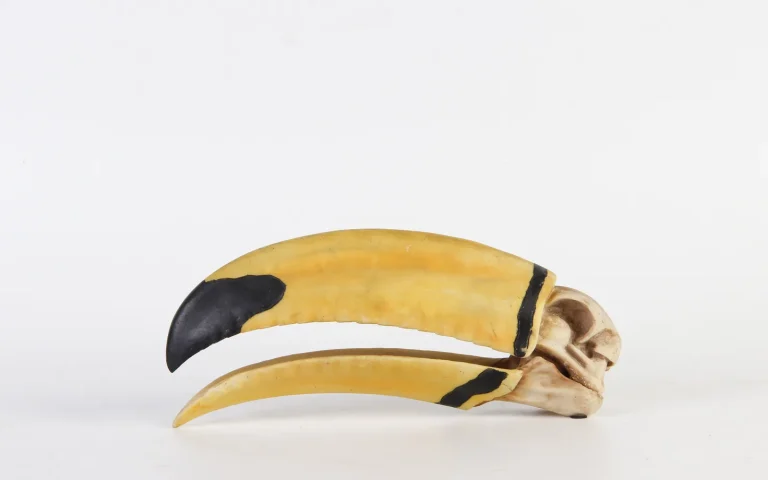
Fossil study decor describes small, fossil-inspired objects made for close viewing rather than wall display. They usually reproduce the shape and texture of a real fossil, cast in resin and finished with a stone-like surface. The most common forms are a fossil fish plaque, an insect specimen, a paperweight and a small free-standing figure. Because these pieces sit within arm’s reach, their value comes from detail: a clear outline, crisp edges and a finish that looks like aged stone rather than glossy plastic.
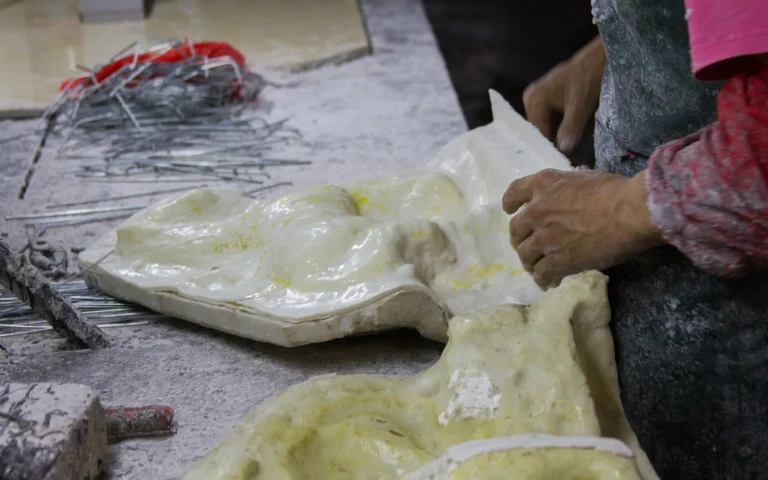
Saint Art makes this kind of object in Dehua, Fujian, the ceramic and decorative-arts region of southern China, and works across resin, metal, ceramic, crystal glass, fabric, shell and bamboo. The studio was founded in 2023, sells to buyers in North America, Europe, Japan and Korea, and shows at the Canton Fair.
Resin fossil fish: material and detail
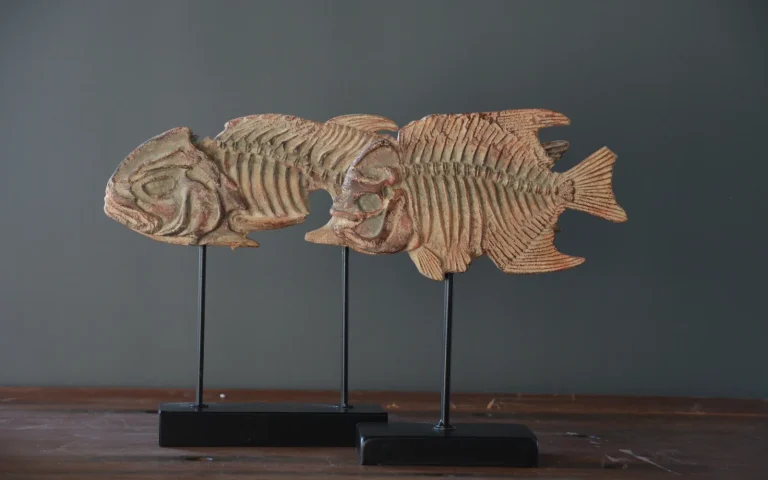
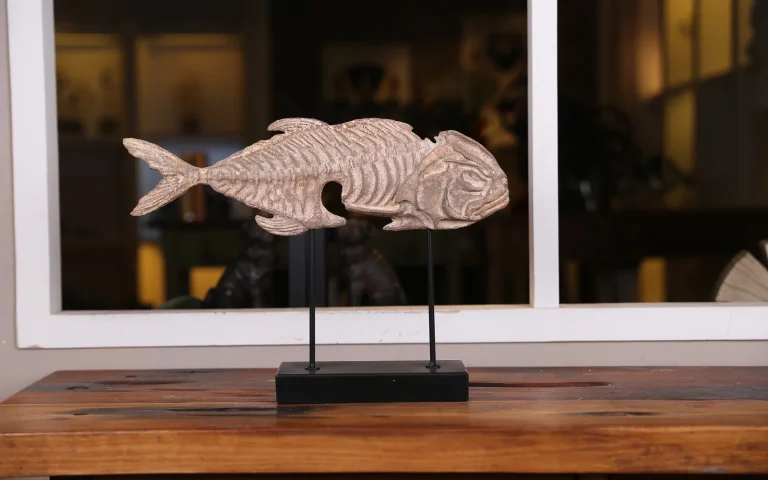
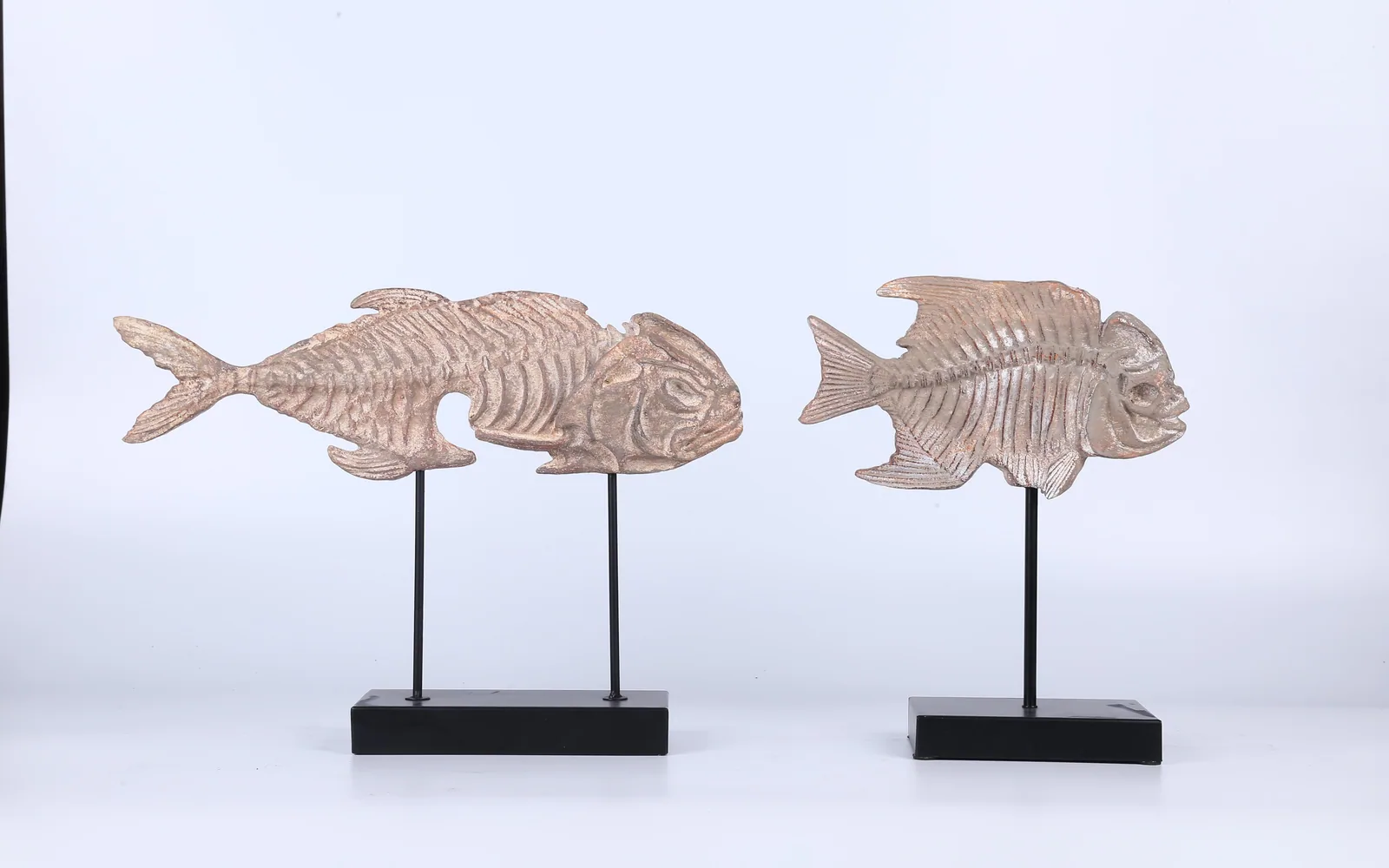
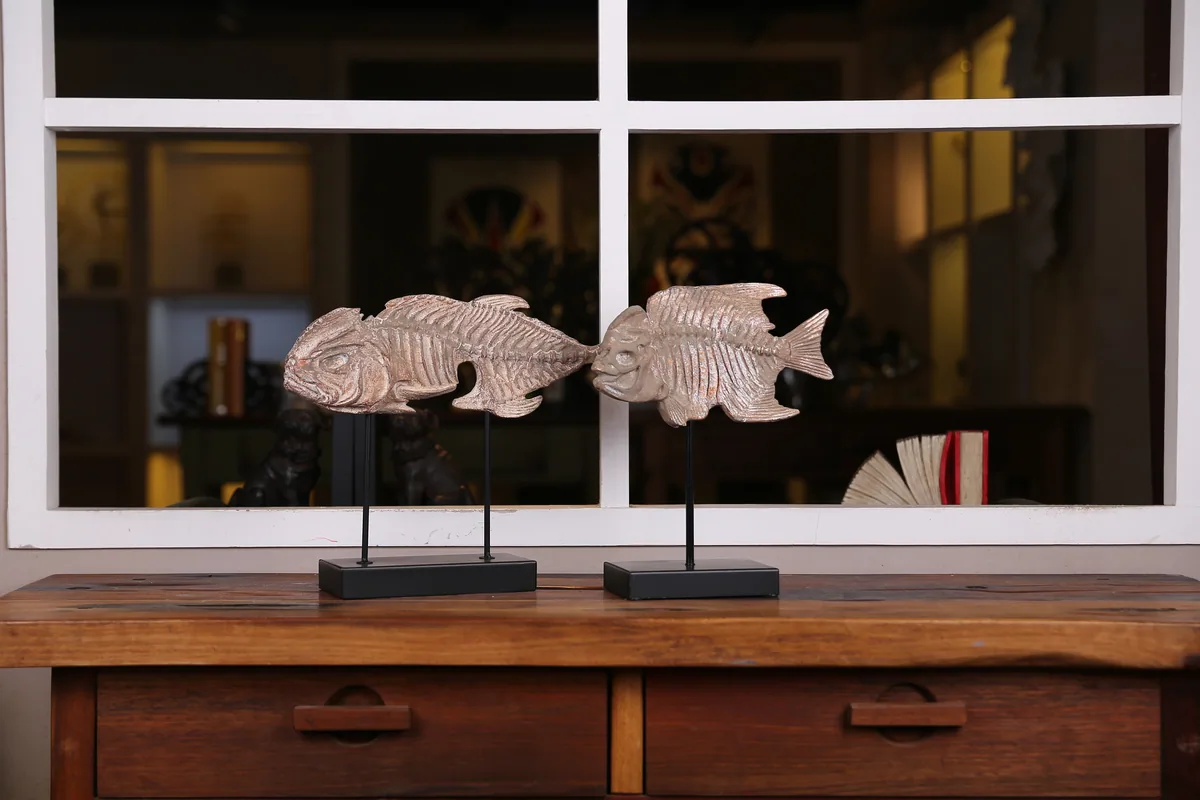
A resin fossil fish is usually cast to copy the silhouette of a prehistoric fish pressed into rock. The best examples keep the raised body and the fine fins and scales legible, with a neutral stone palette of grey, buff and charcoal so the piece reads as a study object rather than a toy. Resin is a practical material here: it holds fine detail, is lighter than stone and ceramic, and can be finished to look like fossilised limestone. Pieces in this category are typically small enough to hold in one hand, though larger display versions are also produced.
When you compare pieces, look for clean edges and a matte or softly sealed surface. Avoid casts with air bubbles on the face or a glossy topcoat that reflects room light, because those flaws show at desk distance. A shallow relief can stand against books, while a free-standing fish works as a shelf centrepiece.
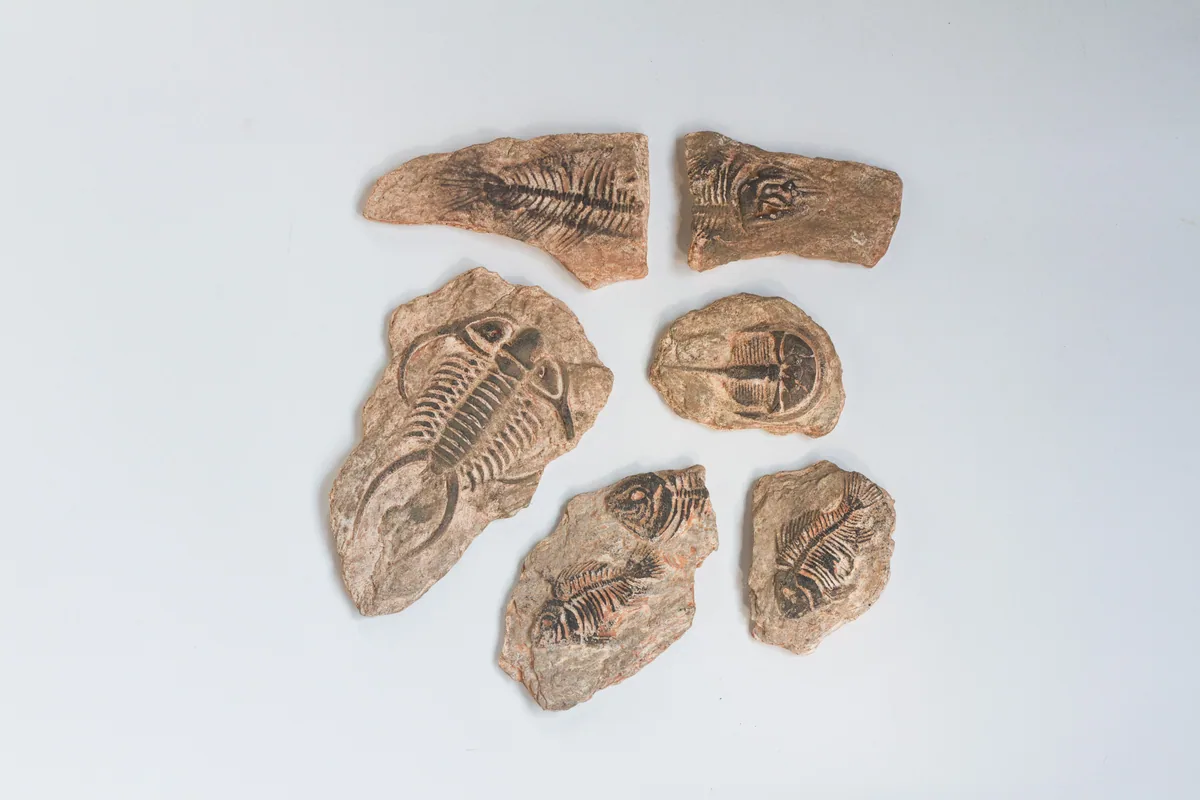
Insect fossil collections and magnets for small spaces
An insect fossil collection suits a compact desk, a kitchen board or a fridge door. The pieces reproduce dragonfly, beetle and other insect impressions in resin or resin-backed metal, often with a magnet on the reverse. Because they are small and light, they can be grouped in a grid or scattered among notes and photographs without dominating a surface.
Insect fossil magnets do not need a shelf: they hold directly to a magnetic surface, which makes them useful in a rented or shared space where drilling and heavy objects are not allowed. Choose a set with consistent sizing and a flat back so every piece sits flush and does not wobble.
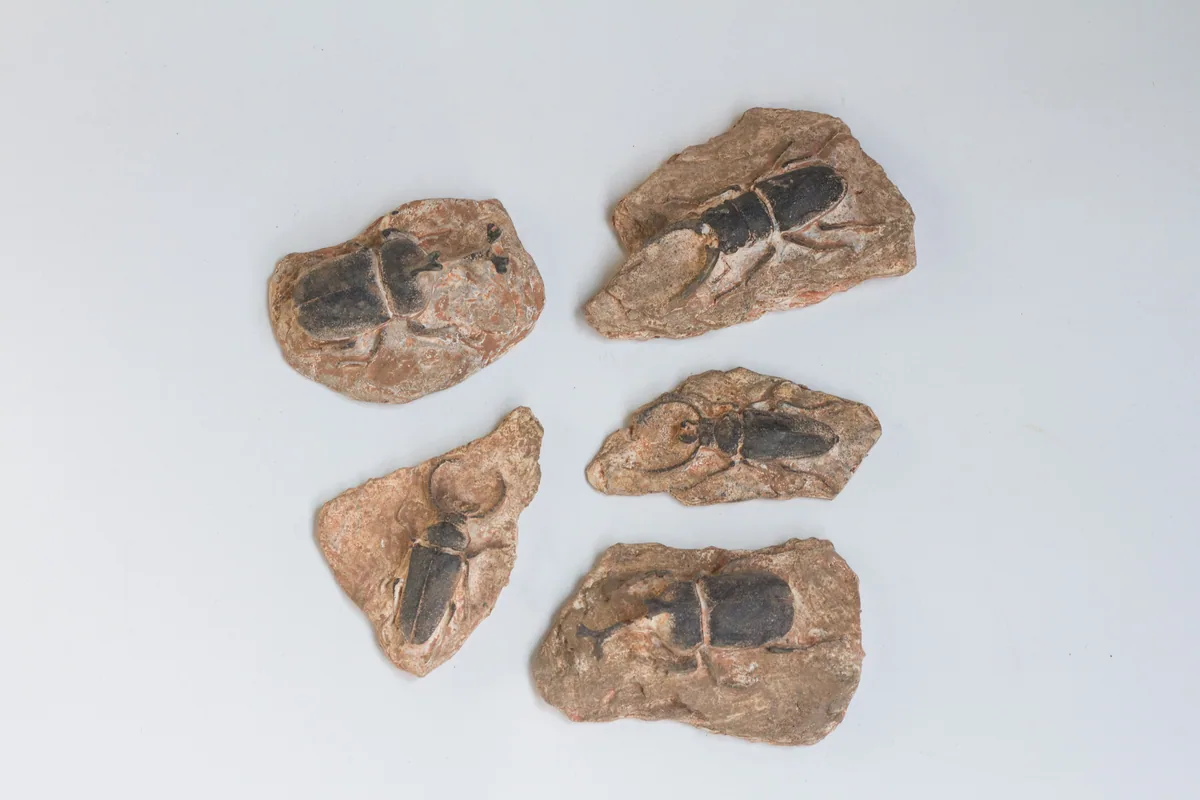
Fossil paperweights and desk study objects
A fossil paperweight doubles as a functional object: it holds papers and mail in place while offering the same sculpted detail as a display piece. The weight of a resin cast is enough to anchor documents, and the flat base keeps it stable. A larger free-standing fossil fish or a shell-shaped study piece can sit at the corner of a desk where it is visible during calls but does not get in the way.
Desk study objects read best when they echo the room around them. A stone-toned fossil works with paper, wood and linen, and it pairs naturally with a magnifier, a brass lamp or a small plant. Keep the grouping to three or fewer objects so each one has breathing room.
How to style fossil study decor
Place fossil study decor where it can be seen at close range: on a desk, a shelf, a mantel or a bedside table. A single fossil fish works as a focal point, while two or three related pieces form a small collection. Group objects of different heights but similar finish, and leave clear space between them so the detail is not crowded.
For a collector’s corner, mix a fossil fish with an insect fossil collection and a fossil paperweight, then add a natural-history book or a specimen box to give the display a purpose. Keep the palette narrow, stone greys and warm neutrals, so the pieces feel curated rather than random.
How to clean and care for resin study pieces
Dust fossil study decor with a soft, dry brush or a microfibre cloth. For a gentle clean, use a cloth barely dampened with water and dry the piece immediately, especially around recessed detail. Avoid solvent-based cleaners, abrasive sponges and prolonged direct sunlight, which can fade a painted finish over time. A resin fossil fish or paperweight should not be soaked, because water trapped in a small recess can sit against the surface.
Buying fossil study decor: what to check
When you buy, confirm the material, the finished dimensions and the weight, and ask for a photograph taken straight on rather than an angled marketing shot. For a trade or private-label order, check whether the studio offers OEM and ODM, a pre-production sample and a stated minimum order quantity. Saint Art runs OEM and ODM programmes for custom sizes and colours, and its custom page is where to send a brief.
Our resin fossil fish study piece and insect fossil magnet collection cover the desk and wall-magnet forms, while the prehistoric fossil wall panels extend the same natural-history look to a full wall. The Saint Art studio profile explains the materials and production region, and the custom and trade page is where to send a sourcing brief.
Further reading: Smithsonian National Museum of Natural History fossil collections, American Museum of Natural History specimen and fossil resources.
Frequently asked questions
What is a fossil study piece used for?
A fossil study piece is a small, fossil-inspired object made for close viewing on a desk, shelf or bedside table. It reproduces the shape of a fish, insect or shell in resin and works as a paperweight, a display object or a collectible accent.
How do you display a fossil fish study piece?
Place a fossil fish study piece where it can be seen at close range, such as a desk, shelf or mantel. Stand it against books or on a small riser, and keep a two- or three-piece grouping to related stone-toned objects so the detail stays the focus.
Are resin fossil casts heavy?
Resin fossil casts are lighter than genuine stone or solid metal, which makes them easy to move between a desk and a shelf. A paperweight-sized cast is still heavy enough to hold papers and mail in place without being hard to lift.
Do fossil magnets damage a fridge surface?
Flat-backed fossil magnets with a smooth, non-abrasive rear do not scratch a fridge or board under normal use. Wipe the back of each magnet clean before placing it, and avoid sliding it across the surface, because trapped grit can leave light marks.
How do you clean a resin fossil study object?
Dust a resin fossil study object with a soft dry brush or microfibre cloth. For a light clean, use a cloth barely dampened with water and dry the piece immediately, and avoid solvent cleaners, abrasive sponges and prolonged direct sunlight.
{“@context”:”https://schema.org”,”@type”:”FAQPage”,”mainEntity”:[{“@type”:”Question”,”name”:”What is a fossil study piece used for?”,”acceptedAnswer”:{“@type”:”Answer”,”text”:”A fossil study piece is a small, fossil-inspired object made for close viewing on a desk, shelf or bedside table. It reproduces the shape of a fish, insect or shell in resin and works as a paperweight, a display object or a collectible accent.”}},{“@type”:”Question”,”name”:”How do you display a fossil fish study piece?”,”acceptedAnswer”:{“@type”:”Answer”,”text”:”Place a fossil fish study piece where it can be seen at close range, such as a desk, shelf or mantel. Stand it against books or on a small riser, and keep a two- or three-piece grouping to related stone-toned objects so the detail stays the focus.”}},{“@type”:”Question”,”name”:”Are resin fossil casts heavy?”,”acceptedAnswer”:{“@type”:”Answer”,”text”:”Resin fossil casts are lighter than genuine stone or solid metal, which makes them easy to move between a desk and a shelf. A paperweight-sized cast is still heavy enough to hold papers and mail in place without being hard to lift.”}},{“@type”:”Question”,”name”:”Do fossil magnets damage a fridge surface?”,”acceptedAnswer”:{“@type”:”Answer”,”text”:”Flat-backed fossil magnets with a smooth, non-abrasive rear do not scratch a fridge or board under normal use. Wipe the back of each magnet clean before placing it, and avoid sliding it across the surface, because trapped grit can leave light marks.”}},{“@type”:”Question”,”name”:”How do you clean a resin fossil study object?”,”acceptedAnswer”:{“@type”:”Answer”,”text”:”Dust a resin fossil study object with a soft dry brush or microfibre cloth. For a light clean, use a cloth barely dampened with water and dry the piece immediately, and avoid solvent cleaners, abrasive sponges and prolonged direct sunlight.”}}]}